
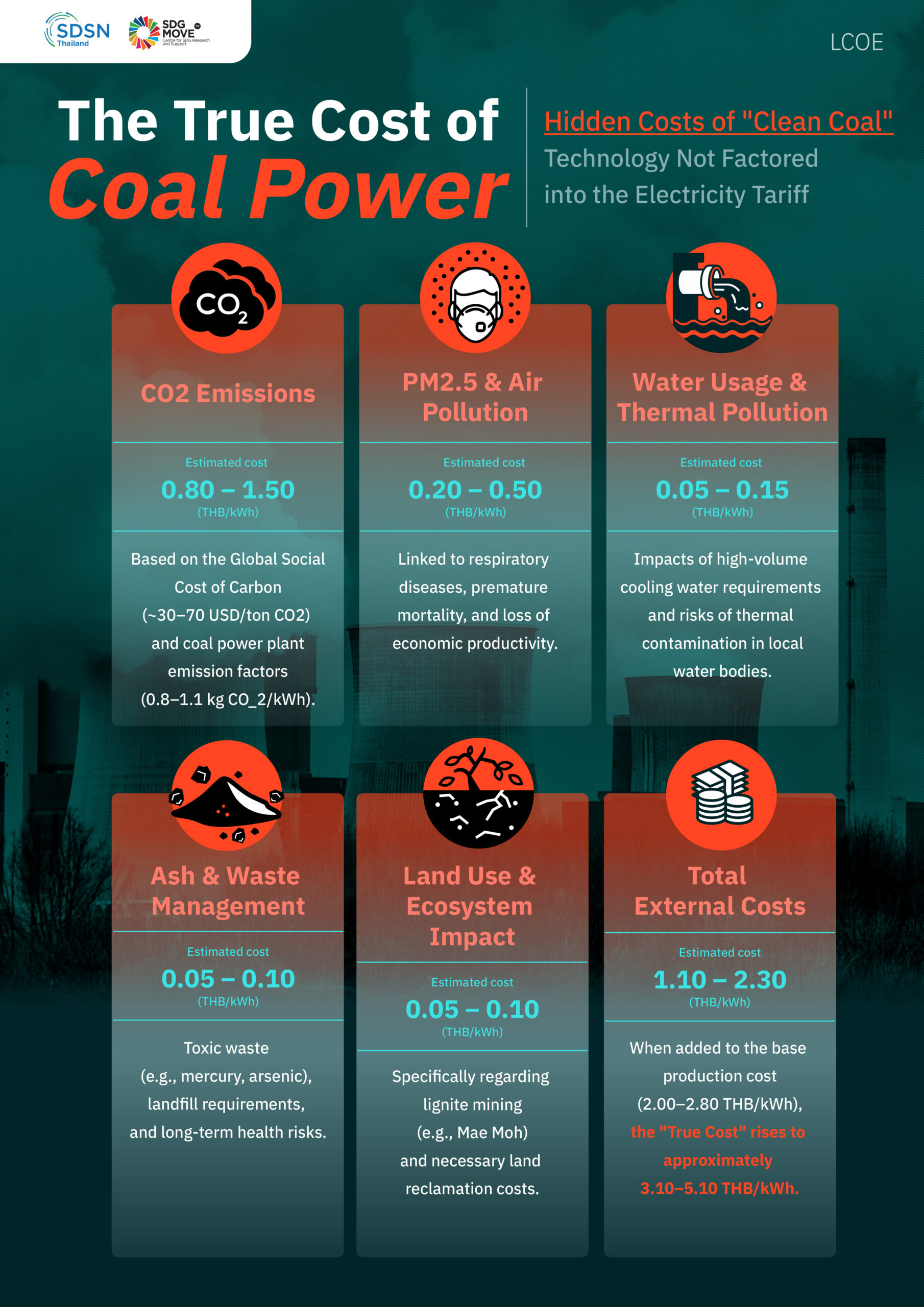
The True Cost of Coal: Beyond the Electricity Bill (ผลกระทบของการใช้ถ่านหินในด้านสิ่งแวดล้อม เศรษฐกิจ และความมั่นคงทางพลังงาน)
– อ่านบทความภาษาไทยด้านล่าง –
Coal has long been a pillar of global energy production. In countries like Thailand, it’s seen as a reliable, affordable source of electricity. But is coal really as cheap and beneficial as it seems? When we look past the electricity bill and examine the hidden costs—environmental damage, health impacts, and long-term energy security—the story changes dramatically. Let’s explore the real impact of coal in three key areas: the environment, the economy, and energy security.
1. Environmental Impact: The Price We Pay for Power
At first glance, coal seems like a practical solution for energy needs. It’s abundant, can be stored for long periods, and keeps the lights on when other sources are unreliable. But every time we flip a switch powered by coal, there’s a hidden environmental toll.
Air Pollution and Health
Burning coal releases a cocktail of pollutants into the air—sulfur dioxide, nitrogen oxides, fine particulate matter (PM2.5), and heavy metals like mercury. These aren’t just abstract chemical names; they’re the invisible enemies that seep into our lungs and bloodstream. In communities living near coal-fired power plants, the effects are painfully real. Imagine a small town where children cough persistently, elderly residents struggle with worsening asthma, and hospital visits for respiratory problems rise year after year. Parents spend sleepless nights worrying about their children’s health, not realizing that the “cheap” electricity they enjoy comes at such a steep personal cost.
Landscape and Water Destruction
Coal doesn’t just pollute the air—it scars the land and poisons water. Mining operations tear apart forests and hillsides, turning green landscapes into barren pits. Rivers and streams that once provided clean water for farming and daily life become contaminated with toxic runoff. In northern Thailand, for example, some villages have seen their streams turn cloudy and unsafe, forcing families to buy bottled water or travel long distances just to find something safe to drink. The environmental cost of coal lingers for generations, long after the last lump has been burned.
Climate Change
Coal is one of the biggest culprits in global warming. It’s responsible for massive carbon dioxide emissions, which trap heat in the atmosphere and drive climate change. The consequences—rising sea levels, extreme weather, and unpredictable harvests—are already being felt worldwide. When we choose coal, we’re not just affecting our local environment; we’re contributing to a global crisis that threatens everyone’s future.
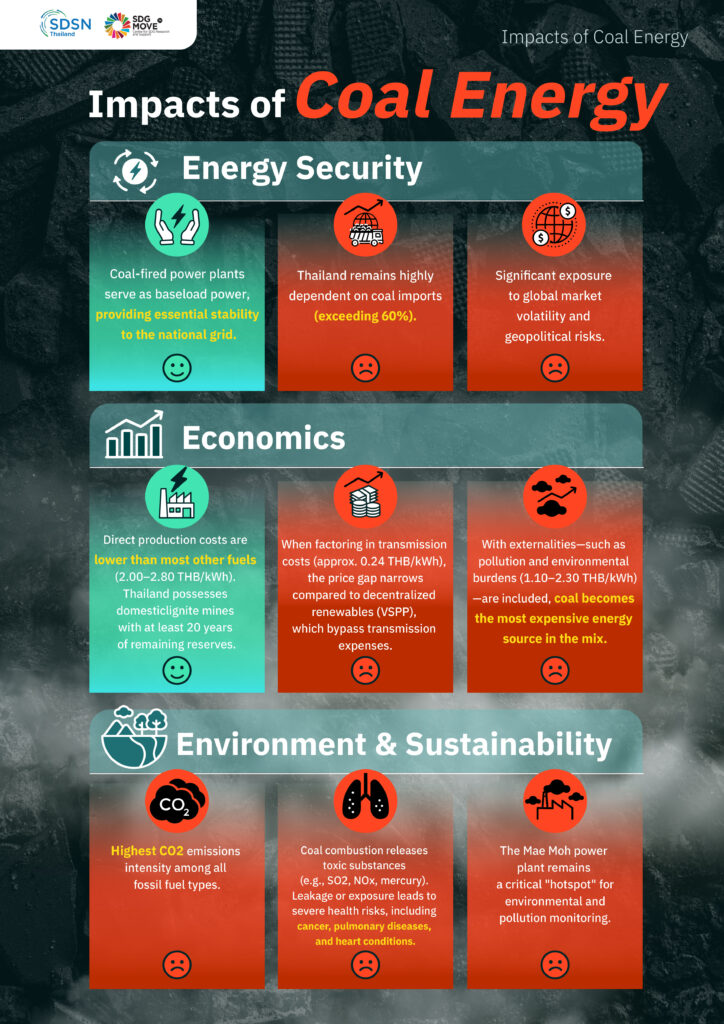
2. Economic Impact: The Illusion of Cheap Electricity
It’s easy to be swayed by the promise of low electricity bills. Coal-fired power plants often produce electricity at a lower direct cost than solar or wind. But this calculation leaves out a crucial factor: externalized costs.
The Hidden Costs Behind the Bill
Externalized costs are the expenses that don’t show up on your monthly bill but are paid in other ways—through hospital fees, lost workdays, and environmental cleanup. Imagine a family living near a coal plant. Their electricity bill is lower than that of city dwellers, but their child develops chronic asthma, leading to frequent doctor visits and expensive medication. The money they save on electricity is quickly eaten up by medical expenses. Multiply this scenario across thousands of families, and the “cheap” energy starts to look very expensive indeed.
Job Creation and Loss
Coal mining and power generation do create jobs, especially in rural areas where employment opportunities are limited. When a new mine opens, it can bring a wave of prosperity—at least at first. But these jobs are often temporary. Once the coal runs out or environmental protests shut down operations, workers are left scrambling for new opportunities, often without the skills needed for other industries. In contrast, renewable energy sectors like solar and wind are creating stable, long-term jobs in installation, maintenance, and manufacturing. These jobs are cleaner, safer, and more sustainable for the future.
Agricultural and Social Costs
Coal pollution doesn’t just affect health—it also damages crops and livestock. Farmers near coal plants may find their harvests shrinking and their animals falling ill, forcing them to buy food they once grew themselves. Social costs, like missed school days due to illness or the stress of living in a polluted environment, are harder to measure but just as real.
3. Energy Security: A Short-Term Solution with Long-Term Risks
Coal’s abundance and storability make it attractive for countries worried about energy shortages or price spikes in oil and gas. In times of crisis, having a stockpile of coal can seem like a safety net.
Short-Term Stability
Suppose Thailand faces a sudden shortage of imported oil or a spike in natural gas prices. Coal reserves can keep power plants running and prevent blackouts. This short-term stability is one reason why policymakers hesitate to move away from coal.
Long-Term Vulnerability
But the world is changing. International pressure to cut carbon emissions is growing. Countries that cling to coal may face trade barriers, carbon taxes, or lose out on foreign investment. Imagine a future where Thai exports are penalized because the country is seen as a climate laggard, or where global investors shy away from projects that aren’t environmentally sustainable. True energy security isn’t just about having enough fuel today—it’s about building a system that can withstand the challenges of tomorrow.
Why “Cheap” Electricity Isn’t the Whole Story
When we talk about the price of coal, we need to look beyond the numbers on our electricity bills. The real cost includes:
- Medical bills for illnesses caused by pollution.
- Environmental cleanup for damaged land and water.
- Lost productivity when people are too sick to work or children miss school.
- Long-term risks from climate change and international isolation.
If we added up all these hidden costs, coal would no longer look like a bargain. In fact, studies show
that when externalized costs are considered, coal is often more expensive than renewable energy sources like solar and wind.
A Glimpse into a Community’s Reality
Picture a village with a coal-fired power plant at its heart. The electricity is cheap, but the air smells of smoke and chemicals. Children cough through the night, and the local clinic is always busy. Farmers struggle with poor harvests, and families spend more on medicine than they save on electricity. The promise of prosperity has faded, replaced by a daily struggle for health and survival.
Now, imagine that same village powered by clean energy. The air is fresh, the river runs clear, and new jobs are created in solar panel installation and maintenance. Children are healthier, and families can focus on building a better future. This isn’t just a dream—it’s a real possibility if we make the right choices today.
Conclusion: Making Informed Choices for Our Future
Coal has played a vital role in powering our world, but its true cost is far higher than most people realize. The environmental destruction, hidden economic burdens, and long-term risks far outweigh the short-term benefits of cheap electricity. As we look to the future, it’s time to invest in cleaner, safer, and more sustainable energy sources.
By understanding the full impact of coal, we can make decisions that protect our health, our environment, and our economy—not just for ourselves, but for generations to come. The next time you see a low electricity bill, remember: the real price of coal is paid in ways we can’t always see, but we all feel its effects.
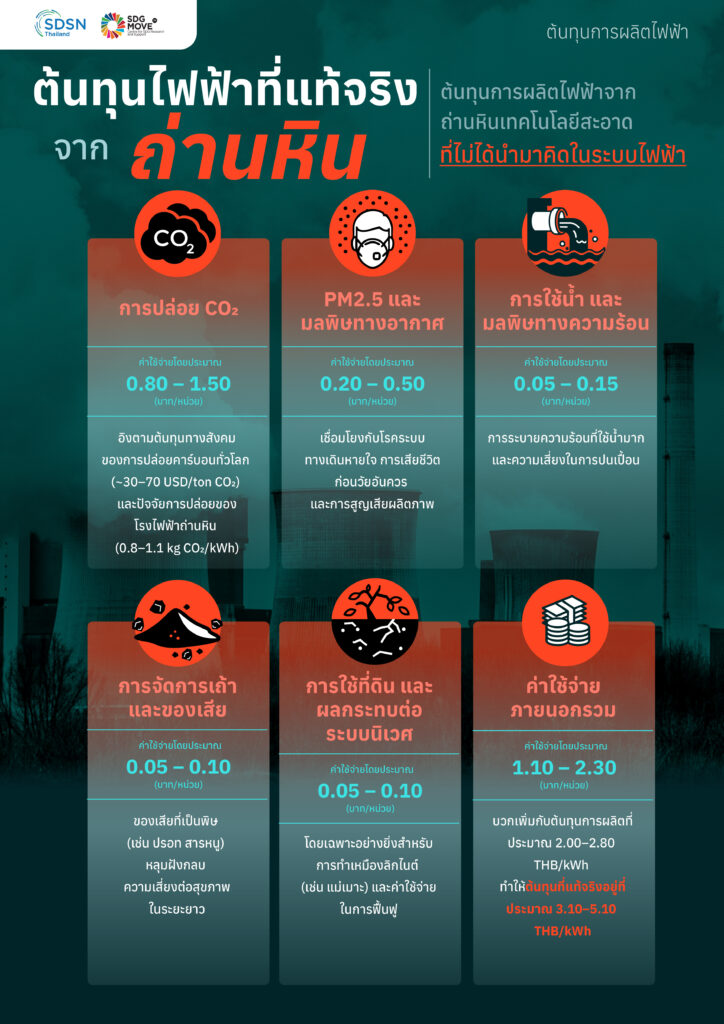
ผลกระทบของการใช้ถ่านหินในด้าน สิ่งแวดล้อม เศรษฐกิจ และความมั่นคงทางพลังงาน
ถ่านหินยังคงเป็นแหล่งพลังงานสำคัญของโลกและของไทย เพราะราคาถูกและมีปริมาณสำรองมาก แต่เบื้องหลังราคาที่ดูเหมือนจะคุ้มค่า กลับมีผลกระทบที่ซ่อนอยู่ซึ่งหลายคนอาจมองข้าม หากลองพิจารณาในแต่ละด้านอย่างรอบคอบ จะเห็นว่าถ่านหินไม่ได้ “ถูก” อย่างที่คิด
ด้านสิ่งแวดล้อม
การเผาไหม้ถ่านหินเพื่อผลิตไฟฟ้าเป็นสาเหตุหลักของการปล่อยก๊าซเรือนกระจกและมลพิษทางอากาศ เช่น ซัลเฟอร์ไดออกไซด์ ไนโตรเจนออกไซด์ ฝุ่น PM2.5 และโลหะหนักอย่างปรอท ตัวอย่างที่เห็นได้ชัดคือเหตุการณ์ในจังหวัดระยอง เมื่อหลายปีก่อน ชาวบ้านในพื้นที่ใกล้โรงไฟฟ้าถ่านหินจำนวนมากประสบปัญหาเกี่ยวกับระบบทางเดินหายใจ เด็กๆ มีอาการไอเรื้อรัง และผู้สูงอายุมีอาการหอบหืดรุนแรงขึ้น หลายครอบครัวต้องพาเด็กไปพบแพทย์บ่อยครั้ง และค่าใช้จ่ายในการรักษาก็สูงขึ้นโดยที่พวกเขาไม่ได้เป็นผู้ก่อมลพิษโดยตรง
นอกจากอากาศแล้ว การทำเหมืองถ่านหินยังเปลี่ยนแปลงภูมิทัศน์และทำลายระบบนิเวศ ตัวอย่างเช่น ในบางพื้นที่ของภาคเหนือของไทย การเปิดเหมืองถ่านหินทำให้ป่าไม้ถูกทำลาย ลำธารที่เคยใสสะอาดกลายเป็นน้ำขุ่น มีสารพิษตกค้างในดินและน้ำ ทำให้ชาวบ้านไม่สามารถใช้น้ำเพื่อการเกษตรหรืออุปโภคบริโภคได้เหมือนเดิม ชุมชนต้องปรับตัวและบางครอบครัวต้องย้ายถิ่นฐาน
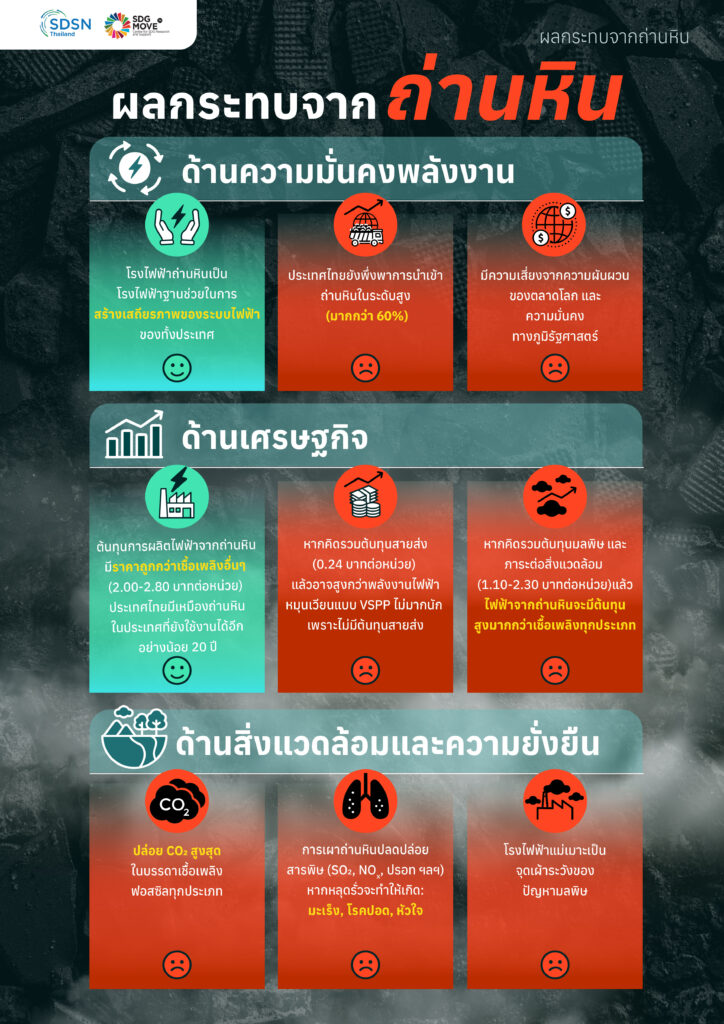
ด้านเศรษฐกิจ: ราคาค่าไฟฟ้า งาน และอาชีพ
แม้ว่าค่าไฟฟ้าจากถ่านหินจะดูเหมือนถูกกว่าพลังงานทางเลือกอื่นๆ แต่ราคานี้ยังไม่รวม “ต้นทุนแฝง” ที่สังคมต้องจ่าย เช่น ค่ารักษาพยาบาลจากโรคที่เกิดจากมลพิษ หรือค่าเสียหายทางสิ่งแวดล้อม หากลองนึกถึงครอบครัวหนึ่งในชุมชนใกล้โรงไฟฟ้าถ่านหิน พวกเขาอาจได้รับค่าไฟที่ถูกกว่าคนในเมือง แต่ต้องเสียเงินจำนวนมากกับค่ารักษาโรคหอบหืดของลูก หรือสูญเสียรายได้จากการเกษตรเพราะดินและน้ำปนเปื้อน
ในแง่ของการจ้างงาน อุตสาหกรรมถ่านหินสร้างงานในเหมืองและโรงไฟฟ้า ตัวอย่างเช่น ในชุมชนหนึ่งที่เคยมีเหมืองถ่านหินเปิดใหม่ ชาวบ้านจำนวนมากได้งานเป็นคนงานเหมืองและมีรายได้เพิ่มขึ้นในช่วงแรก แต่เมื่อเหมืองปิดลงเพราะถ่านหินหมดหรือถูกต่อต้านจากชุมชน งานเหล่านั้นก็หายไปทันที หลายคนต้องย้ายไปหางานใหม่ในเมืองใหญ่ หรือเปลี่ยนอาชีพโดยขาดทักษะรองรับ ขณะที่งานในพลังงานหมุนเวียน เช่น การติดตั้งแผงโซลาร์เซลล์หรือกังหันลม แม้จะยังไม่แพร่หลายในทุกพื้นที่ แต่มีแนวโน้มสร้างงานที่มั่นคงและปลอดภัยกว่าในระยะยาว
ด้านความมั่นคงทางพลังงาน
ถ่านหินเป็นเชื้อเพลิงที่มีสำรองมากและสามารถเก็บไว้ใช้ได้นาน หลายประเทศ—including ไทย—จึงเลือกใช้ถ่านหินเพื่อเสริมความมั่นคงทางพลังงาน สมมติว่าประเทศไทยประสบปัญหาน้ำมันขาดแคลนหรือราคาก๊าซธรรมชาติผันผวน ถ่านหินที่สำรองไว้ในประเทศก็ยังสามารถนำมาใช้ผลิตไฟฟ้าได้ต่อเนื่อง ไม่ต้องกังวลเรื่องการนำเข้าจากต่างประเทศ
อย่างไรก็ตาม ความมั่นคงที่ว่านี้เป็นเพียงระยะสั้น เพราะในระยะยาว โลกกำลังเปลี่ยนผ่านไปสู่พลังงานสะอาดมากขึ้น หลายประเทศเริ่มออกมาตรการจำกัดการใช้ถ่านหิน เช่น การเก็บภาษีคาร์บอนหรือการตั้งเป้าหมายลดการปล่อยก๊าซเรือนกระจก หากไทยยังพึ่งพาถ่านหินมากเกินไป อาจเผชิญกับแรงกดดันจากนานาชาติ เช่น การถูกกีดกันทางการค้า หรือการสูญเสียโอกาสในการลงทุนจากต่างประเทศที่ต้องการความยั่งยืน
ทำไม “ค่าไฟฟ้าถูก” จึงไม่ใช่คำตอบสุดท้าย
แม้ว่าค่าไฟฟ้าจากถ่านหินจะถูกในบิลที่เราจ่าย แต่ราคานี้ยังไม่รวมต้นทุนที่สังคมต้องแบกรับ เช่น ค่ารักษาพยาบาลจากโรคที่เกิดจากมลพิษ ค่าฟื้นฟูสิ่งแวดล้อมจากการทำเหมือง หรือวันที่ต้องหยุดงานเพราะสุขภาพแย่ลง หากนำต้นทุนเหล่านี้มาคิดรวมกันจริงๆ ถ่านหินจะกลายเป็นพลังงานที่ “แพง” กว่าพลังงานหมุนเวียนหลายเท่า
ลองจินตนาการถึงชุมชนหนึ่งที่มีโรงไฟฟ้าถ่านหินตั้งอยู่กลางหมู่บ้าน เด็กๆ ในชุมชนมีอาการหายใจติดขัดบ่อยครั้ง โรงพยาบาลท้องถิ่นมีผู้ป่วยโรคทางเดินหายใจเพิ่มขึ้นทุกปี ขณะเดียวกัน ชาวบ้านต้องเสียเวลาทำงานเพื่อพาครอบครัวไปหาหมอ รายได้ที่ได้จากค่าไฟฟ้าถูกจึงไม่คุ้มกับค่าใช้จ่ายที่ต้องเสียไปในระยะยาว
บทสรุปอาจกล่าวได้ว่าแม้ถ่านหินจะยังมีบทบาทในระบบพลังงานไทยและโลก แต่ผลกระทบด้านสิ่งแวดล้อม เศรษฐกิจ และสุขภาพนั้นมีมากกว่าที่เห็นในบิลค่าไฟ การเปรียบเทียบราคาค่าไฟฟ้าควรคำนึงถึงต้นทุนที่ซ่อนอยู่ ไม่ใช่แค่ราคาที่จ่ายจริง การเปลี่ยนผ่านสู่พลังงานสะอาดไม่เพียงช่วยลดผลกระทบต่อสิ่งแวดล้อมและสุขภาพ แต่ยังสร้างโอกาสทางเศรษฐกิจใหม่ๆ และเสริมความมั่นคงทางพลังงานในระยะยาว การตัดสินใจเกี่ยวกับอนาคตของถ่านหินจึงควรตั้งอยู่บนข้อมูลที่รอบด้านและคำนึงถึงผลกระทบต่อทุกภาคส่วนของสังคม ไม่ใช่แค่ราคาค่าไฟที่จ่ายในวันนี้เท่านั้น.


