

Coal Power Plants in Thailand: Navigating Energy Security and Environmental Transition (โรงไฟฟ้าถ่านหินในประเทศไทย: สถานการณ์ปัจจุบันและอนาคต)
– อ่านบทความภาษาไทยด้านล่าง –
Coal Power Plants in Thailand: Navigating Energy Security and Environmental Transition
Thailand’s energy landscape stands at a crossroads. While the country pushes toward renewable energy and cleaner alternatives, coal-fired power plants continue to play a vital role in keeping the lights on for millions of Thai citizens. This complex energy story reveals both the challenges and opportunities facing one of Southeast Asia’s most dynamic economies.
The Current Coal Power Landscape
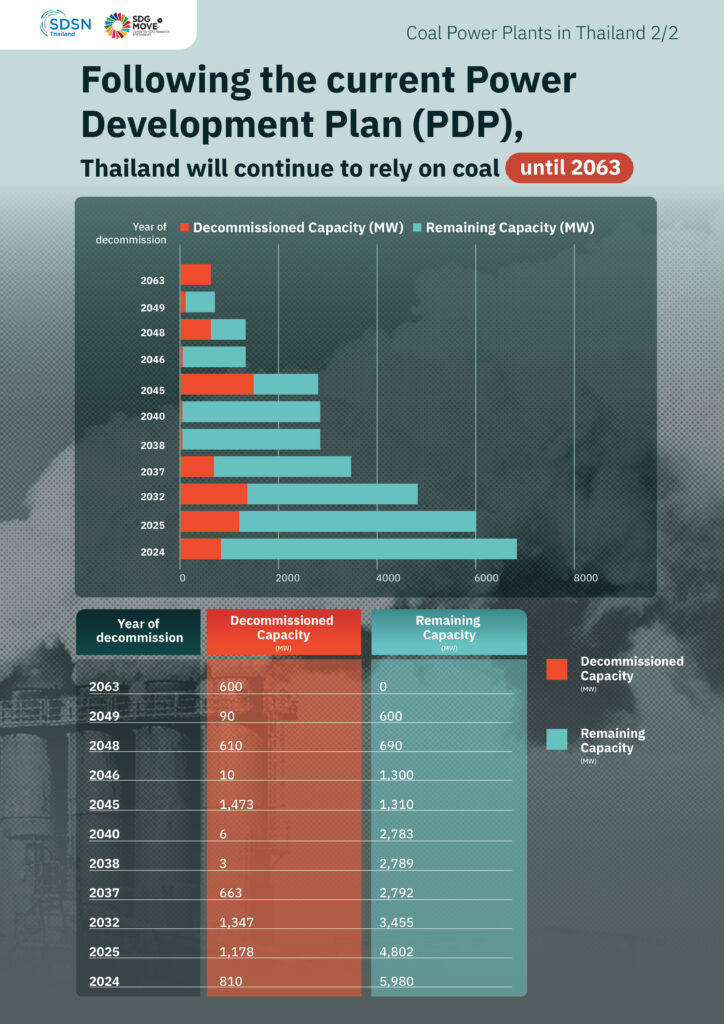
Across Thailand, 13 coal-fired power plants operate with a combined generating capacity of 6,883.01 MW and a contracted capacity of 6,039.50 MW. These facilities represent a significant portion of the country’s energy infrastructure, split between state-owned and private sector operations that have powered Thailand’s industrial growth for decades.
The distribution of coal usage in 2023 tells a compelling story: approximately 18,057 thousand tons of coal were imported from abroad, with the industrial sector consuming the lion’s share at 11,208 thousand tons. Independent power producers (IPPs) used 4,066 thousand tons, while small power producers (SPPs) accounted for 2,783 thousand tons.
Mae Moh: The Giant with a Green Future
At the heart of Thailand’s coal power story lies the Mae Moh Power Plant in Lampang Province. This massive facility, operated by the Electricity Generating Authority of Thailand (EGAT), represents the country’s largest coal-fired power generation complex. With a current capacity of approximately 2,400 MW, Mae Moh consumes roughly 14 million tons of lignite coal annually from its adjacent mine.
However, Mae Moh’s story is also one of transformation. Beginning in 2026, the plant will undergo significant downsizing, reducing its capacity to approximately 1,200 MW and cutting coal consumption to 7 million tons per year. The most dramatic change comes with the complete phase-out scheduled for 2050, marking the end of an era for Thailand’s coal power generation.
The transition plan is ambitious yet pragmatic. EGAT intends to introduce biomass co-firing technology, initially blending 14 percent biomass with coal. If successful and economically viable, the second phase will increase biomass usage, potentially reaching 100 percent biomass fuel in the future. This innovative approach demonstrates how traditional power plants can evolve to meet environmental goals while maintaining energy security.
Private Sector Players: Diversity in Coal Power
Thailand’s private sector operates several significant coal-fired facilities, each with unique characteristics and strategic importance.
Global Power Synergy Public Company Limited (GPSC) stands out as a major player, producing and distributing electricity, steam, industrial water, and other utilities. With approximately 660 MW of electricity generation capacity spread across three coal-fired power plants, GPSC represents the diversified approach many Thai companies take toward energy production.
TPI Polene Power Public Company Limited (TPIPP) focuses on electricity generation from waste energy and heat energy, emphasizing technological development and innovation. Their single coal-fired power plant, with a total installed capacity of 150 MW, demonstrates how smaller players can still make meaningful contributions to the energy mix.
IRPC Public Company Limited operates as Southeast Asia’s first fully integrated petrochemical industry operator. Their combined heat and power approach includes a coal-fired power plant with 307 MW capacity, where coal accounts for approximately 15-20 percent of total electricity production, showcasing the integration of coal power within broader industrial operations.
The Import Challenge: Thailand’s Coal Dependency
Thailand’s energy security depends heavily on coal imports, which account for 60 percent of the country’s total coal consumption. This dependency creates both opportunities and vulnerabilities in the nation’s energy strategy.
The primary source countries include Indonesia, Australia, Russia, and Laos, reflecting Thailand’s strategic position in regional energy trade networks. This geographical diversity helps mitigate supply risks while maintaining competitive pricing.
Two major companies dominate Thailand’s coal import landscape:
Banpu Public Company Limited imports approximately 1 million tons of coal annually from mines in Indonesia, China, and Australia. The company allocates 60 percent to the paper industry and 40 percent for electricity generation by IRPC. Notably, Banpu plans to reduce imports to 500,000 tons in the future, reflecting broader industry trends toward reduced coal dependency.
Lanna Resources Public Company Limited imports 700,000-900,000 tons annually from joint venture mines in Indonesia, primarily serving the cement industry (60-70 percent). This steady demand demonstrates coal’s continued importance in Thailand’s industrial sector.
Industrial Sector: The Hidden Coal Story
While much attention focuses on power generation, Thailand’s industrial sector represents the largest coal consumer. The three-year trend from 2021-2023 reveals significant volatility:
- 2021: 16,184 thousand tons
- 2022: 2,922 thousand tons
- 2023: 11,208 thousand tons
This fluctuation reflects changing industrial demands and economic conditions, but the underlying trend shows increasing industrial coal usage even as power generation demand decreases. Industries such as cement, textiles, food processing, paper, and fiber manufacturing continue to rely on coal for their operations.
Future Outlook: Balancing Act
Thailand’s coal power sector faces a fundamental transformation. While demand for coal in electricity generation is declining, industrial usage is rising, creating a complex transition scenario that requires careful management.
The country’s approach reflects a pragmatic understanding of energy security needs while acknowledging environmental responsibilities. The Mae Moh transformation serves as a blueprint for how traditional coal plants can evolve, potentially inspiring similar conversions elsewhere.
The biomass co-firing technology being implemented at Mae Moh represents more than just a fuel switch—it demonstrates Thailand’s commitment to innovation in energy transition. If successful, this approach could influence coal plant operations across Southeast Asia and beyond.
Conclusion: A Nation in Energy Transition
Thailand’s coal power story is ultimately one of careful transition rather than abrupt change. The country recognizes that energy security cannot be compromised while pursuing environmental goals. The planned reduction and eventual elimination of coal power generation, combined with continued industrial usage, reflects a nuanced approach to energy policy.
As Thailand moves toward 2050 and beyond, the success of initiatives like Mae Moh’s biomass conversion will likely determine whether other coal plants follow similar paths. The country’s experience offers valuable lessons for other developing nations facing similar energy transition challenges.
The coal power plants of today may look very different tomorrow, but their evolution will continue to power Thailand’s economic growth while adapting to a changing world. This transformation represents not just a shift in fuel sources, but a fundamental reimagining of how a nation can balance immediate energy needs with long-term environmental sustainability.
โรงไฟฟ้าถ่านหินในประเทศไทย: สถานการณ์ปัจจุบันและอนาคต
ถ่านหินเป็นหนึ่งในเชื้อเพลิงสำคัญที่ใช้ในการผลิตไฟฟ้าในประเทศไทย แม้ว่าในปัจจุบันจะมีการปรับเปลี่ยนไปสู่พลังงานหมุนเวียนมากขึ้น แต่ถ่านหินยังคงมีบทบาทสำคัญในการรักษาความมั่นคงทางพลังงานของประเทศ
สถานการณ์ปัจจุบันของโรงไฟฟ้าถ่านหิน
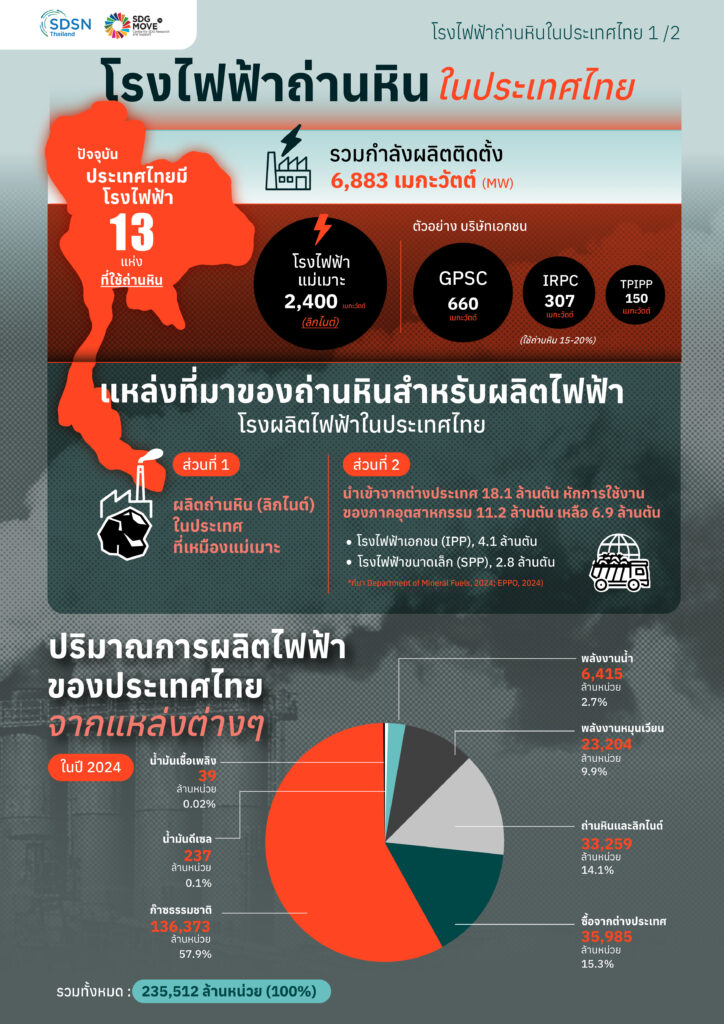
ประเทศไทยมีโรงไฟฟ้าถ่านหินทั้งหมด 13 แห่ง โดยมีกำลังการผลิตรวม 6,883.01 เมกะวัตต์ และกำลังการผลิตตามสัญญา 6,039.50 เมกะวัตต์ โรงไฟฟ้าเหล่านี้แบ่งออกเป็นสองกลุ่มหลัก คือ โรงไฟฟ้าของการไฟฟ้าฝ่ายผลิตแห่งประเทศไทย (กฟผ.) และโรงไฟฟ้าของภาคเอกชน
โรงไฟฟ้าแม่เมาะ โรงไฟฟ้าที่ใหญ่ที่สุดในประเทศ
โรงไฟฟ้าแม่เมาะในจังหวัดลำปาง ถือเป็นโรงไฟฟ้าถ่านหินที่ใหญ่ที่สุดในประเทศไทย โดยมีกำลังการผลิตประมาณ 2,400 เมกะวัตต์ ใช้ถ่านหินลิกไนต์จากเหมืองแม่เมาะในการผลิตไฟฟ้า ซึ่งใช้ถ่านหินประมาณ 14 ล้านตันต่อปี
อย่างไรก็ตาม โรงไฟฟ้าแม่เมาะมีแผนการปรับลดขนาดการผลิตในอนาคต โดยเริ่มตั้งแต่ปี 2026 จะลดกำลังการผลิตลงเหลือประมาณ 1,200 เมกะวัตต์ และใช้ถ่านหินเพียง 7 ล้านตันต่อปี ก่อนจะหยุดดำเนินการอย่างสมบูรณ์ในปี 2050
กฟผ. มีแผนที่จะใช้เชื้อเพลิงชีวมวลมาทดแทนถ่านหิน โดยจะเริ่มจากการผสมชีวมวล 14 เปอร์เซ็นต์กับถ่านหิน หากประสบความสำเร็จและค่าใช้จ่ายเหมาะสม จะดำเนินการในระยะที่สอง และอาจพัฒนาไปสู่การใช้ชีวมวล 100 เปอร์เซ็นต์ในอนาคต
โรงไฟฟ้าของภาคเอกชน
นอกจากโรงไฟฟ้าของกฟผ. แล้ว ยังมีโรงไฟฟ้าถ่านหินในภาคเอกชนที่สำคัญหลายแห่ง เช่น
- Global Power Synergy (GPSC) ซึ่งเป็นบริษัทที่ผลิตและจำหน่ายไฟฟ้า ไฟฟ้า น้ำเปล่าอุตสาหกรรม และสาธารณูปโภคอื่นๆ มีกำลังการผลิตไฟฟ้าประมาณ 660 เมกะวัตต์ และมีโรงไฟฟ้าถ่านหิน 3 แห่ง
- TPI Polene Power (TPIPP) เป็นบริษัทที่ผลิตไฟฟ้าจากพลังงานเหลือทิ้ง พลังงานความร้อน และเชื้อเพลิงที่สถานีบริการก๊าซธรรมชาติ มีโรงไฟฟ้าถ่านหิน 1 แห่ง กำลังการผลิตรวม 150 เมกะวัตต์
- IRPC เป็นผู้ประกอบการอุตสาหกรรมปิโตรเคมีครบวงจรรายแรกในเอเชียตะวันออกเฉียงใต้ มีโรงไฟฟ้าถ่านหินกำลังการผลิต 307 เมกะวัตต์ โดยถ่านหินคิดเป็นสัดส่วน 15-20 เปอร์เซ็นต์ของการผลิตไฟฟ้าทั้งหมด
การนำเข้าถ่านหินจากต่างประเทศ
ประเทศไทยต้องนำเข้าถ่านหินจากต่างประเทศในปริมาณสูง คิดเป็น 60 เปอร์เซ็นต์ของถ่านหินทั้งหมดในประเทศ ในปี 2023 มีการนำเข้าถ่านหินจากต่างประเทศประมาณ 18,057 พันตัน แบ่งเป็น
- ภาคอุตสาหกรรม 11,208 พันตัน
- ผู้ผลิตไฟฟ้าเอกชนรายใหญ่ (IPPs) 4,066 พันตัน
- ผู้ผลิตไฟฟ้าเอกชนรายเล็ก (SPPs) 2,783 พันตัน
ประเทศหลักที่ไทยนำเข้าถ่านหินจาก ได้แก่ อินโดนีเซีย ออสเตรเลีย รัสเซีย และลาว
บริษัทนำเข้าถ่านหินรายใหญ่
บริษัท บ้านปู เป็นบริษัทที่ประกอบธุรกิจผลิตและจำหน่ายถ่านหิน นำเข้าจากเหมืองถ่านหินในอินโดนีเซีย จีน และออสเตรเลีย ใช้ในอุตสาหกรรมกระดาษ 60 เปอร์เซ็นต์ และเป็นเชื้อเพลิงในโรงไฟฟ้าของ IRPC 40 เปอร์เซ็นต์ ปัจจุบันนำเข้าประมาณ 1 ล้านตัน แต่มีแผนลดลงเหลือ 500,000 ตันในอนาคต
บริษัท ล้านนา รีซอร์ส นำเข้าถ่านหินจากเหมืองร่วมทุนในอินโดนีเซีย ส่วนใหญ่ใช้ในอุตสาหกรรมซีเมนต์ 60-70 เปอร์เซ็นต์ ในช่วง 2021-2024 นำเข้าประมาณ 700,000-900,000 ตันต่อปี
แนวโน้มการใช้ถ่านหินในอนาคต
จากข้อมูลสถิติย้อนหลัง 3 ปี (2021-2023) พบว่าการใช้ถ่านหินในภาคอุตสาหกรรมมีความผันผวน:
- ปี 2021: 16,184 พันตัน
- ปี 2022: 2,922 พันตัน
- ปี 2023: 11,208 พันตัน
แม้ว่าความต้องการถ่านหินในภาคพลังงานสำหรับการผลิตไฟฟ้าจะลดลง แต่การใช้ถ่านหินในภาคอุตสาหกรรมกลับเพิ่มขึ้น เช่น อุตสาหกรรมซีเมนต์ สิ่งทอ อาหาร กระดาษ และเส้นใย
บทสรุป
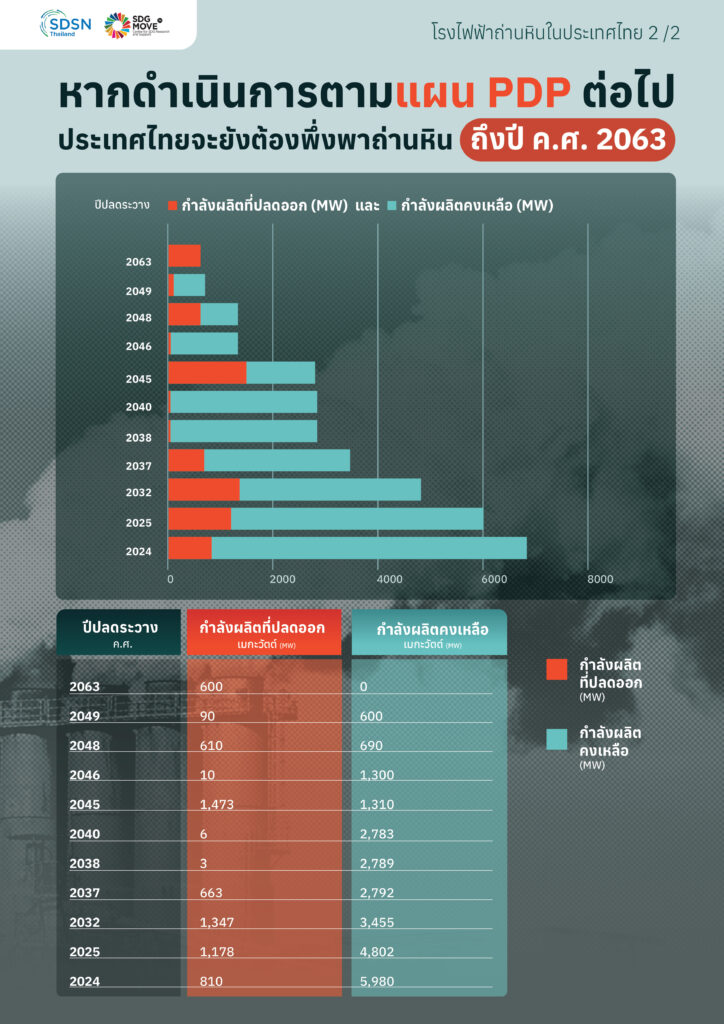
ถ่านหินยังคงมีบทบาทสำคัญในระบบพลังงานของประเทศไทย แม้ว่าจะมีการเปลี่ยนแปลงไปสู่พลังงานที่เป็นมิตรกับสิ่งแวดล้อมมากขึ้น การปรับลดการใช้ถ่านหินในโรงไฟฟ้าแม่เมาะและการเปลี่ยนไปใช้ชีวมวล รวมถึงการพัฒนาเทคโนโลยีที่สะอาดขึ้น จะช่วยลดผลกระทบต่อสิ่งแวดล้อมและเตรียมความพร้อมสำหรับการเปลี่ยนผ่านด้านพลังงานของประเทศในอนาคต


