
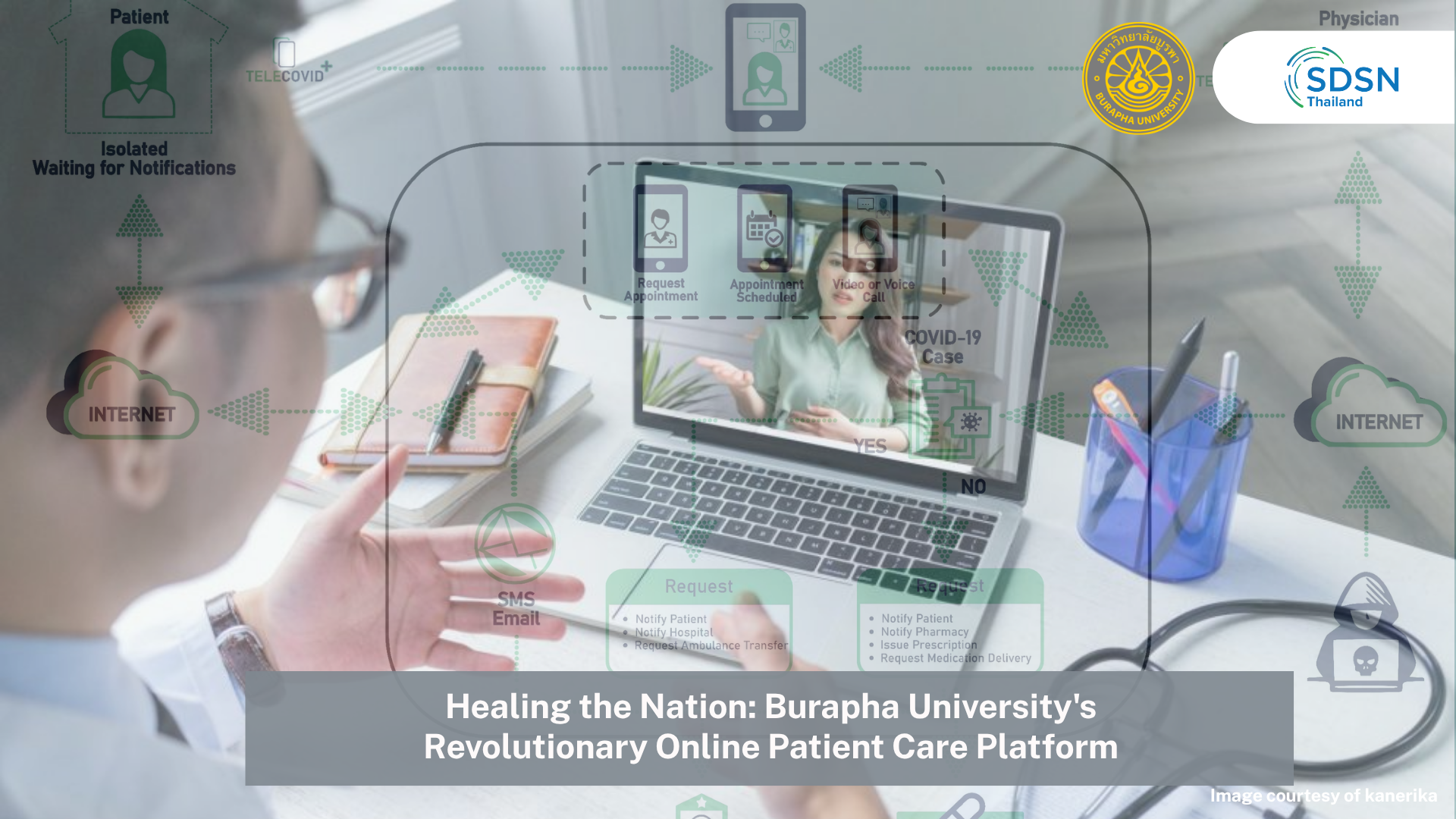
Healing the Nation: Burapha University’s Revolutionary Online Patient Care Platform
In the crucible of crisis, innovation often emerges most powerfully. When the COVID-19 pandemic swept across Thailand, overwhelming medical facilities and leaving healthcare systems struggling to cope with unprecedented patient loads, Burapha University rose to meet this challenge with a groundbreaking initiative that would transform healthcare delivery not just regionally, but nationally. Their online patient care platform stands as perhaps the most outstanding example of how academic institutions can harness interdisciplinary collaboration to address complex sustainability challenges while creating lasting societal impact.
The Genesis of Innovation
The vision behind Burapha University’s online patient care platform emerged from a stark reality: traditional healthcare infrastructure was buckling under the weight of the pandemic. As Assistant Professor Savaminee Teerawut explains, “We recognized that one significant problem during the COVID-19 pandemic was the limited capacity of medical facilities and hospitals due to the high number of patients.” This observation sparked a crucial question that would drive the university’s response: How could academic knowledge be leveraged to address this critical healthcare capacity crisis?
The answer lay not in building more hospitals or training more doctors overnight, but in reimagining how healthcare could be delivered through digital innovation. This platform represents a fundamental shift from reactive to proactive healthcare delivery, embodying the principles of sustainable development by making healthcare more accessible, efficient, and resilient.
The Power of Interdisciplinary Collaboration
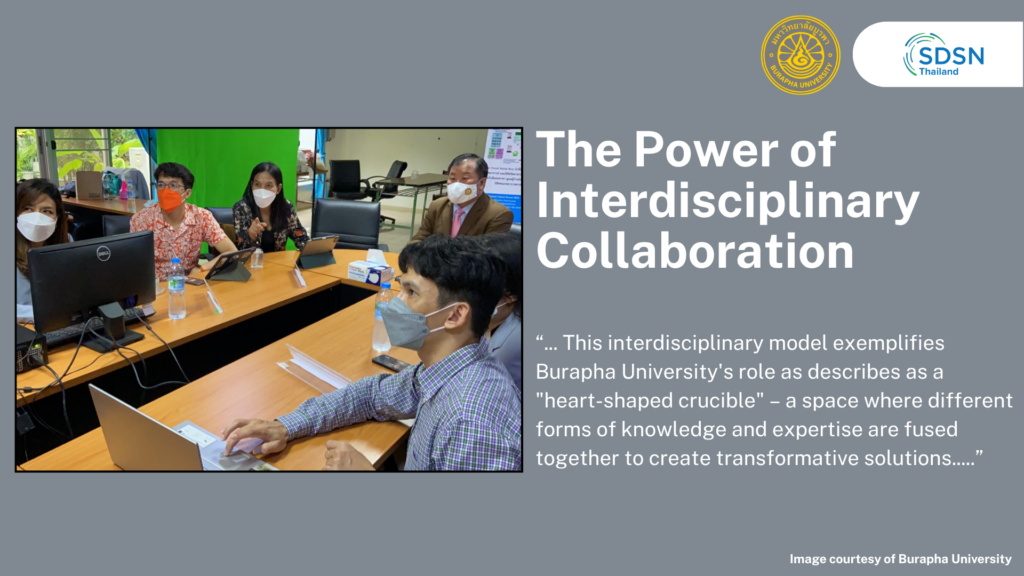
What sets Burapha University’s initiative apart is its truly interdisciplinary approach. The platform emerged from unprecedented collaboration across multiple faculties, bringing together expertise from the Faculty of Engineering, Faculty of Nursing, Faculty of Medicine, and Faculty of Public Health. This convergence of technological innovation with medical expertise and nursing care created a holistic solution that no single discipline could have achieved alone.
The engineering faculty provided the technological infrastructure and user interface design, ensuring the platform could handle large-scale usage while maintaining reliability and security. The medical faculty contributed clinical protocols and diagnostic frameworks, ensuring that the platform met rigorous medical standards. The nursing faculty brought essential patient care perspectives, focusing on the human element of healthcare delivery and patient interaction. Meanwhile, the public health faculty ensured that the platform addressed broader population health concerns and epidemiological considerations.
This interdisciplinary model exemplifies Burapha University’s role as what Professor Teerawut describes as a “heart-shaped crucible” – a space where different forms of knowledge and expertise are fused together to create transformative solutions.
Scale and Impact: A National Success Story
The platform’s success extends far beyond the university’s immediate region. With approximately 300,000 users nationwide, the system has demonstrated remarkable scalability and impact. This reach is particularly significant given Thailand’s diverse geographic landscape, where remote and rural communities often face barriers to accessing quality healthcare services.
The platform’s free accessibility removes economic barriers to healthcare, directly addressing Sustainable Development Goal 3 (Good Health and Well-being) while also contributing to poverty reduction efforts. By eliminating the need for patients to travel long distances for routine consultations or follow-up care, the platform reduces both financial burden and time costs for families across Thailand.
Perhaps most remarkably, this initiative has garnered international recognition, earning a global award that acknowledges its innovative approach to healthcare delivery. This recognition places Burapha University among the world’s leading institutions in digital health innovation, demonstrating how universities in developing countries can create solutions with global relevance.
Sustainability Beyond Healthcare
The online patient care platform embodies multiple dimensions of sustainability that extend well beyond immediate healthcare delivery. From an environmental perspective, the platform significantly reduces carbon emissions by minimizing the need for patient travel to healthcare facilities. This digital-first approach aligns with broader sustainability goals by reducing the environmental footprint of healthcare delivery.
Economically, the platform creates sustainable value by improving healthcare efficiency and reducing systemic costs. By enabling early intervention and preventive care, the system helps prevent more serious health complications that would require expensive emergency interventions. This preventive approach creates long-term cost savings for both individuals and the healthcare system.
Socially, the platform promotes equity by democratizing access to healthcare expertise. Rural communities, elderly patients with mobility challenges, and economically disadvantaged populations can now access quality healthcare consultation without the barriers that traditionally prevented such access.
The Ripple Effect of Innovation
The success of Burapha University’s online patient care platform has created ripple effects that extend far beyond its immediate application. The platform has become a model for other universities and healthcare institutions across Southeast Asia, demonstrating how academic institutions can rapidly develop and deploy technological solutions to address societal challenges.
Moreover, the interdisciplinary collaboration model pioneered in this project has influenced the university’s approach to other sustainability initiatives. The success has validated Burapha’s strategic approach of bringing together diverse expertise to address complex problems, encouraging similar collaborative efforts across other SDG-focused projects.
Looking Forward: A Template for Sustainable Innovation
The online patient care platform represents more than a successful project; it embodies a philosophy of sustainable innovation that can be replicated and adapted across different contexts and challenges. The project demonstrates how universities can serve as catalysts for societal transformation by combining academic expertise with practical problem-solving.
As Professor Teerawut notes, the university’s approach involves “looking to the future and understanding what a sustainable world needs.” The platform’s success provides a template for addressing future healthcare challenges while building resilient systems that can adapt to changing circumstances.
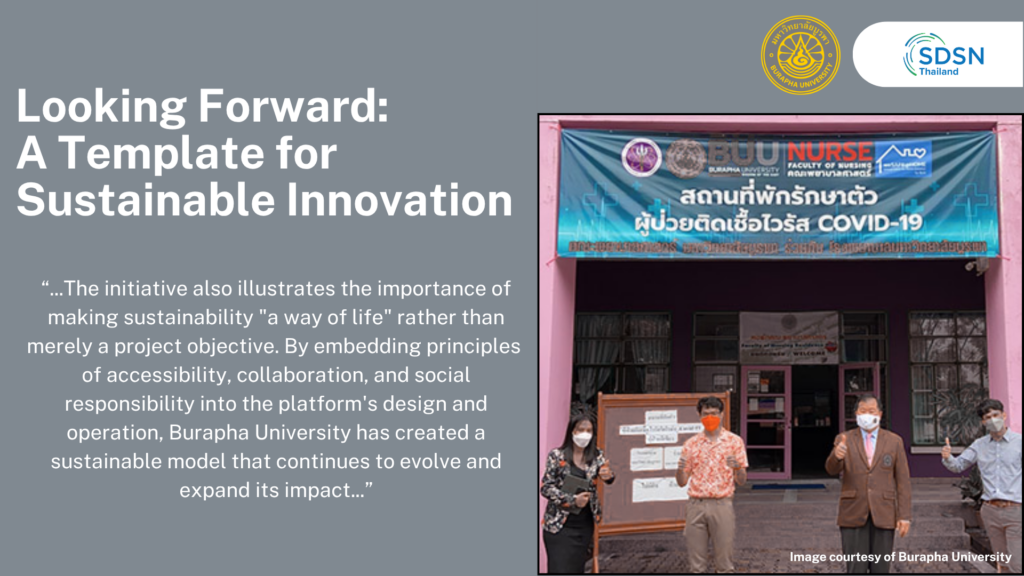
The initiative also illustrates the importance of making sustainability “a way of life” rather than merely a project objective. By embedding principles of accessibility, collaboration, and social responsibility into the platform’s design and operation, Burapha University has created a sustainable model that continues to evolve and expand its impact.
Burapha University’s online patient care platform stands as a testament to the transformative power of academic institutions when they embrace their role as catalysts for sustainable development. Through interdisciplinary collaboration, innovative thinking, and unwavering commitment to social impact, the university has created a solution that addresses immediate healthcare needs while building foundations for long-term sustainability.
The platform’s success in reaching 300,000 users nationwide and earning international recognition demonstrates that sustainability initiatives can achieve both local impact and global relevance. Most importantly, it shows how universities can serve as the “heart-shaped crucible” that Professor Teerawut describes – bringing together knowledge, innovation, and social need to create solutions that benefit all of society.
In conclusion, as Thailand and the world continue to face complex sustainability challenges, Burapha University’s online patient care platform provides both inspiration and a practical model for how academic institutions can lead the way toward a more sustainable, equitable, and resilient future. In the words of Professor Teerawut, when all hearts beat in unison toward common goals, “the hands that must take action will know what to do.”


