
Moon Island: A Beacon of Sustainable Learning and Community Integration
Nestled along the serene banks of the Chi River in Ban Koeng Operation Station, Koeng Subdistrict, the “Moon Island” Lifelong Learning Center Project stands as a testament to the transformative power of interdisciplinary collaboration and community-centered research. This groundbreaking initiative, spearheaded by the Walairukhavej Botanical Research Institute in partnership with Mahasarakham University’s Faculty of Tourism and Hotel Management, Faculty of Medicine, and numerous other academic and administrative units, represents far more than a conventional research facility—it embodies a revolutionary approach to sustainable education and community development.
A Living Laboratory for Sustainability
The genius of Moon Island lies in its conception as a living laboratory where theoretical knowledge meets practical application. The project transforms a pristine riverside ecosystem into a dynamic educational platform that seamlessly integrates eco-tourism, organic agriculture, and environmental education. This holistic approach creates a unique learning environment where students, researchers, and community members can observe, participate in, and contribute to sustainable practices in real-time.
The center’s strategic location along the Chi River provides an ideal setting for studying aquatic ecosystems, water conservation, and river-based sustainability practices. The natural landscape serves as both classroom and laboratory, offering unlimited opportunities for hands-on learning and research that would be impossible to replicate in traditional academic settings. This immersive approach to education reflects a growing recognition that environmental challenges require solutions that emerge from direct engagement with natural systems.
Bridging Academia and Community
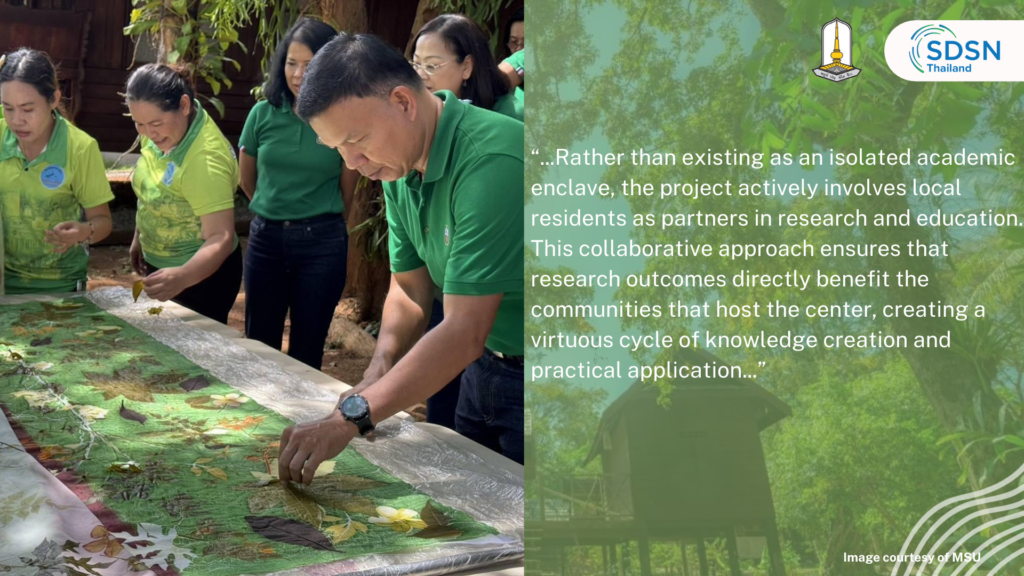
What distinguishes Moon Island from conventional research centers is its unwavering commitment to community integration. Rather than existing as an isolated academic enclave, the project actively involves local residents as partners in research and education. This collaborative approach ensures that research outcomes directly benefit the communities that host the center, creating a virtuous cycle of knowledge creation and practical application.
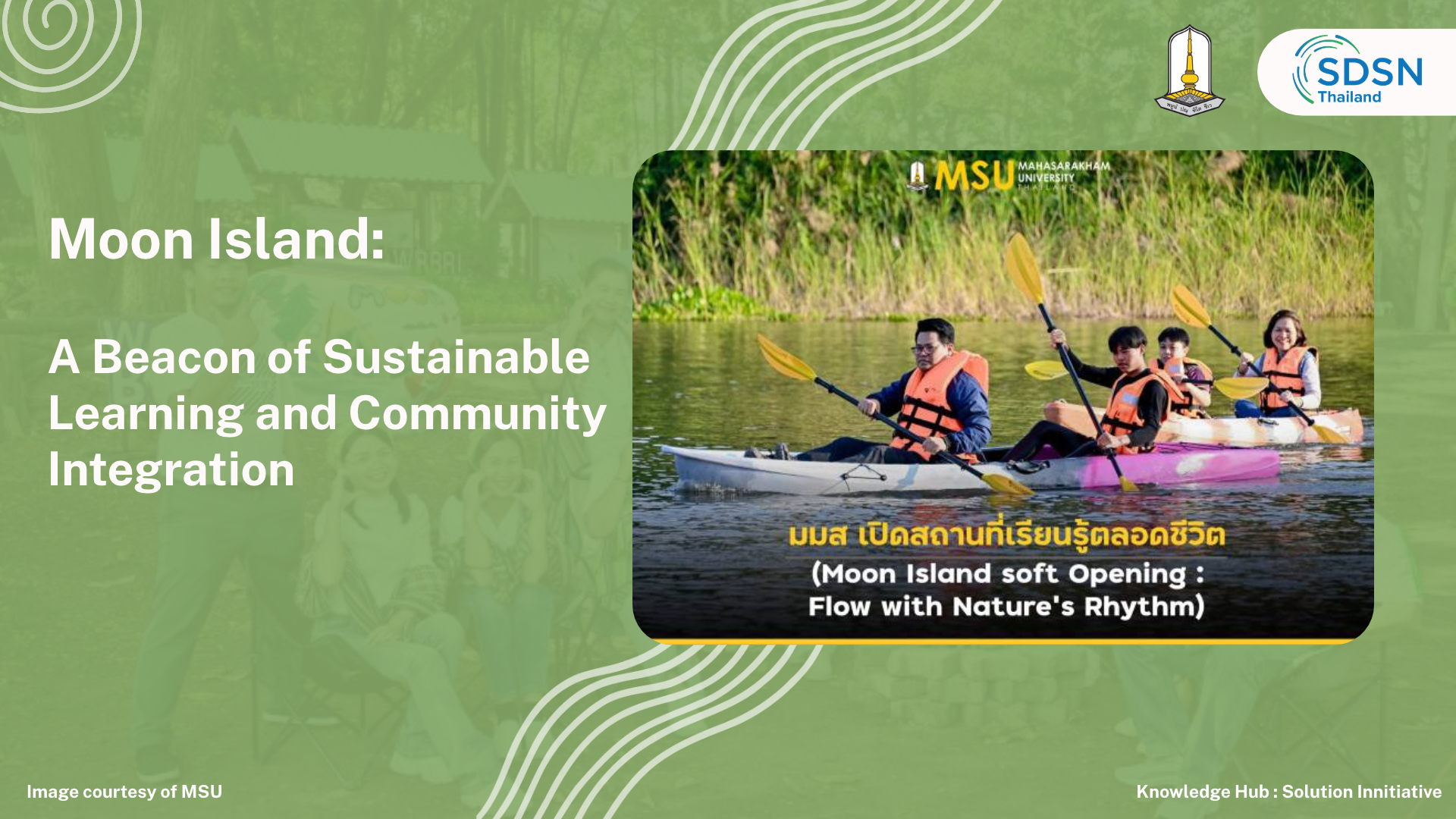
The center’s programming demonstrates this community-centered philosophy through its diverse array of activities. Eco-printing workshops preserve traditional textile arts while teaching sustainable production methods. Kayaking excursions provide recreational opportunities while fostering environmental awareness. Stargazing events connect participants with the natural world while promoting scientific literacy. Photography contests encourage artistic expression while documenting environmental changes. Local food markets celebrate regional cuisine while supporting sustainable agriculture. Classical folk music performances preserve cultural heritage while creating economic opportunities for local artists.
Each of these activities serves multiple purposes: education, recreation, cultural preservation, and economic development. This multifaceted approach ensures that the center’s impact extends far beyond academic research, creating tangible benefits for the entire community.
Alignment with Global Sustainability Goals
Moon Island’s comprehensive approach to sustainability education and community development positions it as a powerful contributor to multiple United Nations Sustainable Development Goals. The project’s primary alignment with SDG 14 (Life Below Water) is evident in its focus on aquatic ecosystems and river conservation. Located on the banks of the Chi River, the center provides an ideal platform for studying freshwater ecosystems, water quality, and the impacts of human activities on aquatic environments.
The project’s contribution to SDG 4 (Quality Education) is equally significant, as it creates innovative educational opportunities that extend far beyond traditional classroom boundaries. By offering lifelong learning opportunities to community members of all ages, Moon Island democratizes access to environmental education and promotes scientific literacy throughout the region.
The center’s support for SDG 11 (Sustainable Cities and Communities) is demonstrated through its promotion of eco-tourism and sustainable development practices that can be replicated in other communities. The project serves as a model for how rural communities can develop economically while preserving their environmental and cultural heritage.
Finally, Moon Island’s emphasis on organic agriculture and sustainable consumption practices directly supports SDG 12 (Responsible Consumption and Production). The center’s educational programs teach participants how to produce food sustainably, reduce waste, and make environmentally conscious consumer choices.
Innovation Through Integration
The interdisciplinary nature of Moon Island represents a fundamental shift in how universities approach research and education. By bringing together expertise from botanical research, tourism management, medicine, and other fields, the project creates opportunities for innovative solutions that would be impossible within traditional academic silos.
This collaborative approach reflects a growing understanding that contemporary challenges—particularly environmental and social challenges—require integrated solutions that draw from multiple domains of knowledge. The involvement of medical faculty, for instance, allows the center to explore connections between environmental health and human health, while the tourism management expertise ensures that educational programs are designed to be both informative and engaging.
The project’s integration of research and recreation also represents an innovative approach to public engagement with science. By making research accessible and enjoyable, Moon Island helps bridge the gap between academic knowledge and public understanding, fostering a more scientifically literate and environmentally conscious society.

A Model for Sustainable Development
Moon Island’s success in improving Mahasarakham University’s rankings in the Times Higher Education World Impact Rankings for SDGs 14, 15, and 4 demonstrates the project’s effectiveness as a model for sustainable development. These improved rankings reflect not only the project’s academic excellence but also its practical impact on environmental conservation and community development.
The project’s approach to sustainability research—emphasizing community collaboration, practical application, and interdisciplinary integration—offers valuable lessons for other institutions seeking to align their research activities with the UN Sustainable Development Goals. By demonstrating that academic research can serve community needs while advancing scientific knowledge, Moon Island provides a template for responsible and impactful higher education.
Looking Forward
As environmental challenges become increasingly urgent and complex, projects like Moon Island become more crucial. The center’s model of community-integrated, interdisciplinary research offers a path forward for universities seeking to maximize their positive impact on society and the environment. By combining rigorous academic research with practical community engagement, Moon Island demonstrates that higher education can be both intellectually rigorous and socially relevant.
The project’s success also highlights the importance of natural settings in environmental education. As urbanization continues to separate people from natural environments, initiatives like Moon Island become essential for maintaining connections between humans and the natural world. These connections are not merely aesthetic or recreational; they are fundamental to developing the environmental awareness and commitment necessary for addressing contemporary sustainability challenges.
The Moon Island Lifelong Learning Center Project represents more than an innovative educational initiative—it embodies a new paradigm for how universities can serve as catalysts for sustainable development. By transforming a natural riverside area into a living laboratory for sustainability, cultural heritage, and lifelong learning, the project demonstrates that academic excellence and community service are not only compatible but mutually reinforcing.
Through its comprehensive approach to education, research, and community engagement, Moon Island serves as a beacon of hope for a more sustainable and equitable future. The project’s success in advancing multiple UN Sustainable Development Goals while improving university rankings and serving community needs proves that sustainability research can indeed serve people—not only by producing knowledge but by building capacity, improving livelihoods, and restoring the environment.
As we face an uncertain environmental future, initiatives like Moon Island provide both inspiration and practical guidance for creating educational experiences that prepare students and communities for the challenges ahead. The project’s legacy will be measured not only in academic achievements but in the generations of environmentally conscious citizens it helps to create and the communities it empowers to build more sustainable futures.


