

Advancing Corporate Sustainability and ESG in Thailand Insights from Thaipat Institute
Continuing our introduction to SDSN Thailand member institutions, we are pleased to introduce Thaipat Institute, a leading public-interest organization advancing corporate sustainability in Thailand. Since its establishment, Thaipat Institute has played an important role in promoting the integration of sustainability into core business practices through research, capacity building, ESG assessment, sustainability disclosure, and collaboration with diverse stakeholders. Its work has contributed to strengthening the understanding and practice of corporate sustainability while connecting Thailand’s business sector with evolving international sustainability standards and frameworks.
In this article, we invite you to learn more about Thaipat Institute through an exclusive interview with Dr. Pipat Yodprudtikan, Chairman of Thaipat Institute. The interview explores Thaipat’s role in advancing sustainable business practices in Thailand, its approaches to integrating sustainability into organizational missions and operations, key research and tools, engagement with businesses and stakeholders, as well as emerging challenges and opportunities for accelerating corporate sustainability.
SDSN Thailand : What do you think are the roles of Thaipat Institute as a leader in sustainable development in Thailand?
Dr.Pipat : Thaipat Institute plays a significant and multifaceted role as a leader in sustainable development in Thailand. Its contributions span across research, training, consulting, and setting benchmarks for corporate sustainability. Here’s a breakdown of its key roles:
Promoting Sustainability Practices and Disclosures: Thaipat Institute has established itself as a trailblazer in the field of ESG (Environmental, Social, and Governance) assessment and recognition in Thailand. By developing comprehensive ESG rating systems, such as the “ESG100” universe along with the “ESG Emerging” and “ESG Turnaround” lists, the Institute provides investors with critical, data-driven insights into the sustainability performance of Thai listed companies. These indices not only highlight leading organizations but also bring visibility to companies making significant progress or showing potential in ESG practices. This transparency encourages healthy competition and motivates businesses to improve their ESG standards, as their performance becomes more visible and comparable within the market.
In addition to its work on ESG ratings, Thaipat Institute actively promotes excellence in sustainability reporting through its annual Sustainability Disclosure Awards. By recognizing and honoring companies that demonstrate clear, comprehensive, and transparent disclosure of sustainability information, the Institute incentivizes organizations to adopt robust reporting practices. These awards are aligned with international frameworks such as the Global Reporting Initiative (GRI), further encouraging Thai businesses to meet global standards in sustainability communication and accountability. This dual approach—combining rigorous ESG assessment with recognition of exemplary disclosure—positions Thaipat Institute as a key driver of sustainable business conduct and responsible investment in Thailand.
Knowledge and Capacity Building: Thaipat Institute advances sustainable development in Thailand through its commitment to thought leadership, professional training, and expert consulting. By conducting rigorous research and publishing influential articles and books on corporate responsibility and sustainability, Thaipat significantly enriches the national dialogue and knowledge base on these critical issues. Its thought leadership helps shape the direction of sustainable development practices and policies across the country.
As an official GRI (Global Reporting Initiative) training partner, Thaipat Institute offers certified training programs that empower professionals with the essential knowledge and practical skills required for effective sustainability reporting. These programs ensure that participants are well-versed in international standards, enabling Thai organizations to align their reporting practices with global expectations.
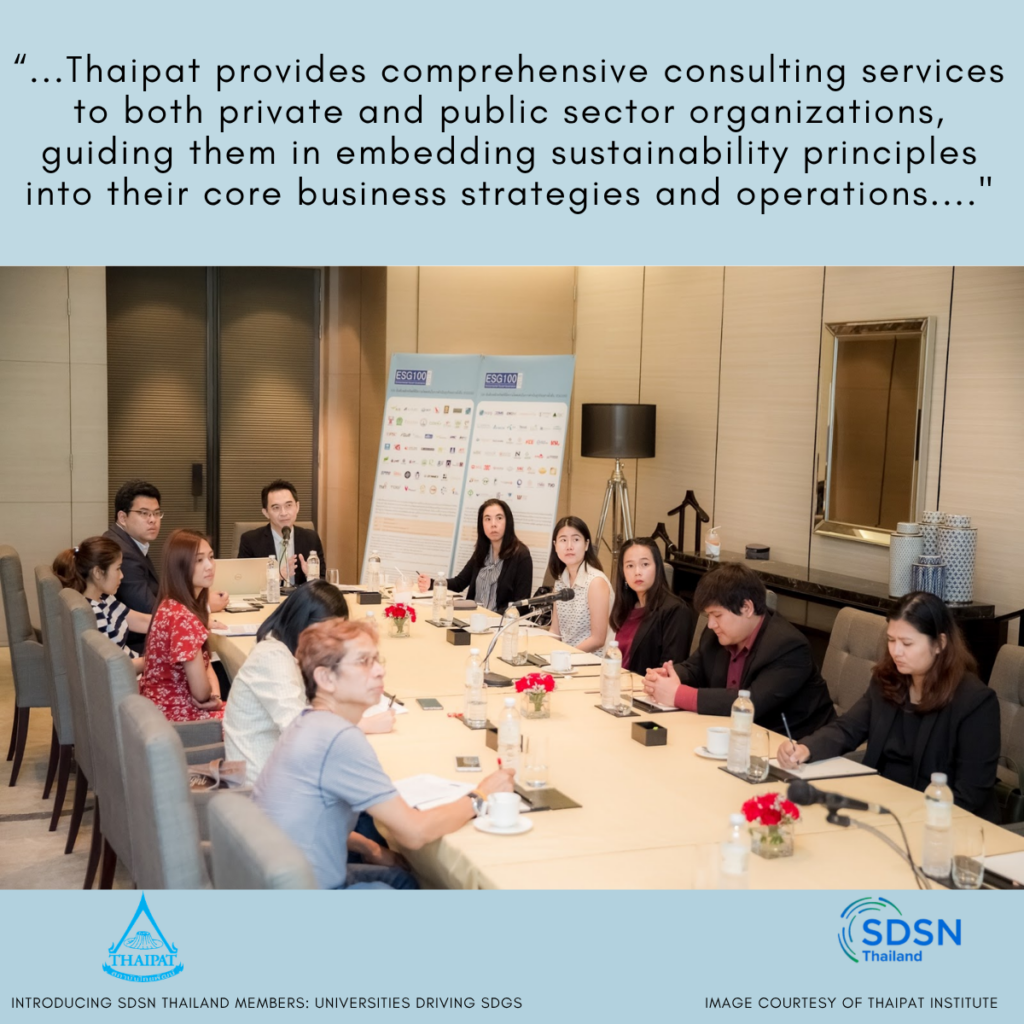
In addition, Thaipat provides comprehensive consulting services to both private and public sector organizations, guiding them in embedding sustainability principles into their core business strategies and operations. Through tailored advice and hands-on support, the Institute helps organizations navigate the complexities of sustainability integration, fostering long-term value creation and responsible business conduct.
Advocacy and Collaboration: Thaipat Institute’s strong international affiliations underscore its dedication to advancing global sustainability goals. As a signatory and active member of prominent organizations such as the United Nations Global Compact, the Principles for Responsible Investment (PRI), and the UN Sustainable Development Solutions Network (SDSN), Thaipat not only aligns itself with internationally recognized frameworks but also facilitates valuable knowledge exchange and collaboration on sustainable development. This global engagement enhances the Institute’s capacity to bring best practices and innovative ideas to Thailand’s sustainability landscape.
Beyond its international partnerships, Thaipat has played a significant role in shaping regional and national sustainability policies. Its appointments as a country representative in ASEAN regional workshops on corporate social responsibility (CSR) action plans, as well as its role as a national focal point for CSR and human rights thematic studies, highlight the Institute’s influence in policy development and its contribution to advancing responsible business conduct across Southeast Asia.
Moreover, Thaipat places great importance on stakeholder engagement and transparency. By actively involving diverse stakeholders including businesses, government agencies, civil society, and the public. The Institute ensures that its initiatives and operations are responsive to their expectations and concerns. This commitment to open dialogue and trust-building strengthens Thaipat’s credibility and effectiveness as a leader in sustainable development.
In essence, Thaipat Institute acts as a critical enabler and catalyst for sustainable development in Thailand by:
- Defining and measuring corporate sustainability through ESG ratings and awards.
- Educating and empowering businesses through training and consulting services.
- Influencing policy and practice through research, advocacy, and international collaborations.
Thaipat’s consistent efforts have positioned itself as a leading voice and practical guide for Thai businesses aiming to achieve long-term growth with social and environmental progress.
SDSN Thailand : What strategies do you believe are essential for integrating sustainability into Thaipat core missions and operations?
Dr.Pipat : Thaipat Institute, by its nature, is already deeply rooted in sustainability. Its core missions of research, training, and consulting on corporate responsibility and sustainability are inherently about advancing the sustainability footprint across its client’s portfolio. Thaipat Institute integrates sustainability into its core missions and operations through a set of well-defined and impactful strategies. First, it leads by projects, exemplified by initiatives like the fence-line air quality monitoring system installation project at Star Petroleum Refining (SPRC), which earned ESG Credits for its significant environmental and social benefits, demonstrating practical application of sustainability principles in industry. This project-based approach ensures tangible outcomes and real-world impact. Second, Thaipat pursues continuous innovation in research and services, regularly updating its ESG rating methodologies and expanding its sustainability indices, such as the ESG100 and ESG Emerging lists, which identify and promote leading and promising companies in Thailand’s capital market. These innovations help investors and businesses stay aligned with evolving global standards and market expectations.
Third, the Institute focuses on strengthening partnerships and collaboration with a broad spectrum of stakeholders, including private companies like CKPower, which has been recognized repeatedly in Thaipat’s ESG100 list for its renewable energy initiatives and sustainability strategy. Such collaborations amplify the reach and effectiveness of sustainability efforts across sectors. Lastly, Thaipat emphasizes enhancing education and awareness by offering certified training programs on sustainability reporting and corporate responsibility, as well as recognizing excellence through its Sustainability Disclosure Awards. For instance, Thai Union Group was honored in 2024 for its transparent and comprehensive sustainability reporting, reinforcing the importance of clear communication in driving sustainable business practices. Together, these strategies enable Thaipat Institute to lead, innovate, collaborate, and educate, thereby advancing sustainability throughout Thailand’s corporate landscape.
By rigorously applying these strategies, Thaipat Institute is able to solidify its leadership position in helping many organizations in Thailand build their sustainability capacity and meet the needs of tomorrow.
SDSN Thailand : What are some of the most impactful research projects or tools developed at Thaipat that promote sustainability?
Dr.Pipat : Thaipat Institute’s research initiative on “The State of Corporate Sustainability in Thailand” aims to provide a comprehensive overview and analysis of how Thai businesses are integrating and disclosing sustainability information and practices. This initiative is an ongoing effort, with reports typically published every two years. Here’s a summary of its key aspects:
- Objective: To monitor and assess the current landscape of corporate sustainability in Thailand, identifying trends, progress, and areas for improvement in how businesses manage and report their environmental, social, and governance (ESG) performance.
- Scope: The research typically gathers data from a large sample of listed companies in Thailand, along with other funds and organizations. For example, the 2024 report assessed information from 838 listed companies and 92 other entities, totaling 930 organizations.
- Methodology and Key Areas of Analysis: The reports are generally structured to provide insights across several critical dimensions:
- Sustainability Disclosure Status: This section presents the overall situation of sustainability disclosure both internationally and specifically in Thailand. It examines the rate at which Thai companies are releasing ESG and sustainability reports, as well as the inclusion of sustainability information in their annual reports (e.g., Form 56-1 One Report).
- GRI-Perspective Sustainability Issue Analysis: The research analyzes the status of corporate sustainability development across various industry groups, focusing on the most frequently disclosed sustainability issues within the economic, social, and environmental dimensions. This analysis is typically benchmarked against the internationally recognized Global Reporting Initiative (GRI) Standards.
- WFE-Perspective ESG Issue Analysis: It assesses the performance of each industry group regarding ESG issues, often providing recommendations for actions that companies in each industry should consider, based on the ESG issues recommended by the World Federation of Exchanges (WFE).
- SDG-Perspective GCI Analysis: The research also examines how companies across different industry groups are responding to the United Nations Sustainable Development Goals (SDGs) through their business processes (SDG-in-process). This often aligns with the Guidance on Core Indicators (GCI) developed by UNCTAD.
- Purpose and Impact:
- Informing Businesses: The reports provide valuable insights for businesses that are already on a sustainable development path, helping them understand current trends and identify key ESG issues relevant to their sectors.
- Guiding Investors: By providing data on corporate sustainability performance, the research (and related initiatives like the ESG100 list) helps institutional and individual investors make more informed decisions about sustainable investments.
- Promoting Transparency: The emphasis on disclosure rates encourages greater transparency from Thai companies regarding their sustainability efforts.
- Benchmarking and Improvement: The detailed analysis allows companies to benchmark their performance against industry peers and identify areas where they can improve their sustainability strategies and reporting.
In essence, “The State of Corporate Sustainability in Thailand” serves as a crucial barometer, reflecting the evolving commitment of Thai businesses to sustainable development and providing a data-driven foundation for continued progress in the field.
SDSN Thailand : In your opinion, how effectively is Thaipat aligned with the United Nations’ Sustainable Development Goals (SDGs) and Can you provide examples of specific initiatives or projects that directly contribute to achieving these goals?
Dr.Pipat : Thaipat Institute demonstrates a high degree of alignment with the United Nations’ Sustainable Development Goals (SDGs) through various strategic initiatives and partnerships. Its work directly supports the achievement of the SDGs in Thailand, primarily by engaging the private sector. Here’s how effectively Thaipat Institute aligns with the SDGs:
- Direct Promotion and Integration of SDGs into Business Practices: Thaipat Institute actively promotes the direct integration of the Sustainable Development Goals (SDGs) into business practices through a comprehensive and practical approach. Central to this is the concept of “SDG-in-process,” which encourages companies to embed the SDGs into their everyday core operations and strategic planning rather than treating them as separate or peripheral CSR activities. This approach is supported by Thaipat’s research, such as the report “Thailand – Corporate SDG Performance by Industry,” which helps businesses identify the most relevant SDGs for their specific sectors, enabling more targeted and effective sustainability efforts. To further assist companies in translating the SDGs into actionable steps, Thaipat provides detailed guidance through resources like its book SDG Business: Corporate Action on Sustainable Development, which outlines a clear five-step framework for corporate engagement with all 17 SDGs. In addition to promoting integration, Thaipat Institute actively fosters transparency and accountability through its annual Sustainability Disclosure Awards. These awards recognize companies that demonstrate clear, comprehensive, and responsible disclosure of sustainability information, with a particular emphasis on SDG 12.6—responsible consumption and production. This focus encourages companies to adopt sustainable practices and systematically incorporate sustainability data into their regular reporting cycles. For example, leading Thai corporations such as EGCO Group have been repeatedly honored for their transparent ESG reporting and commitment to sustainable operations, reflecting Thaipat’s role in elevating disclosure standards nationwide. Through this multi-pronged strategy of research, practical guidance, and recognition, Thaipat Institute effectively drives the meaningful adoption of SDGs within Thailand’s business community, fostering long-term sustainable development.
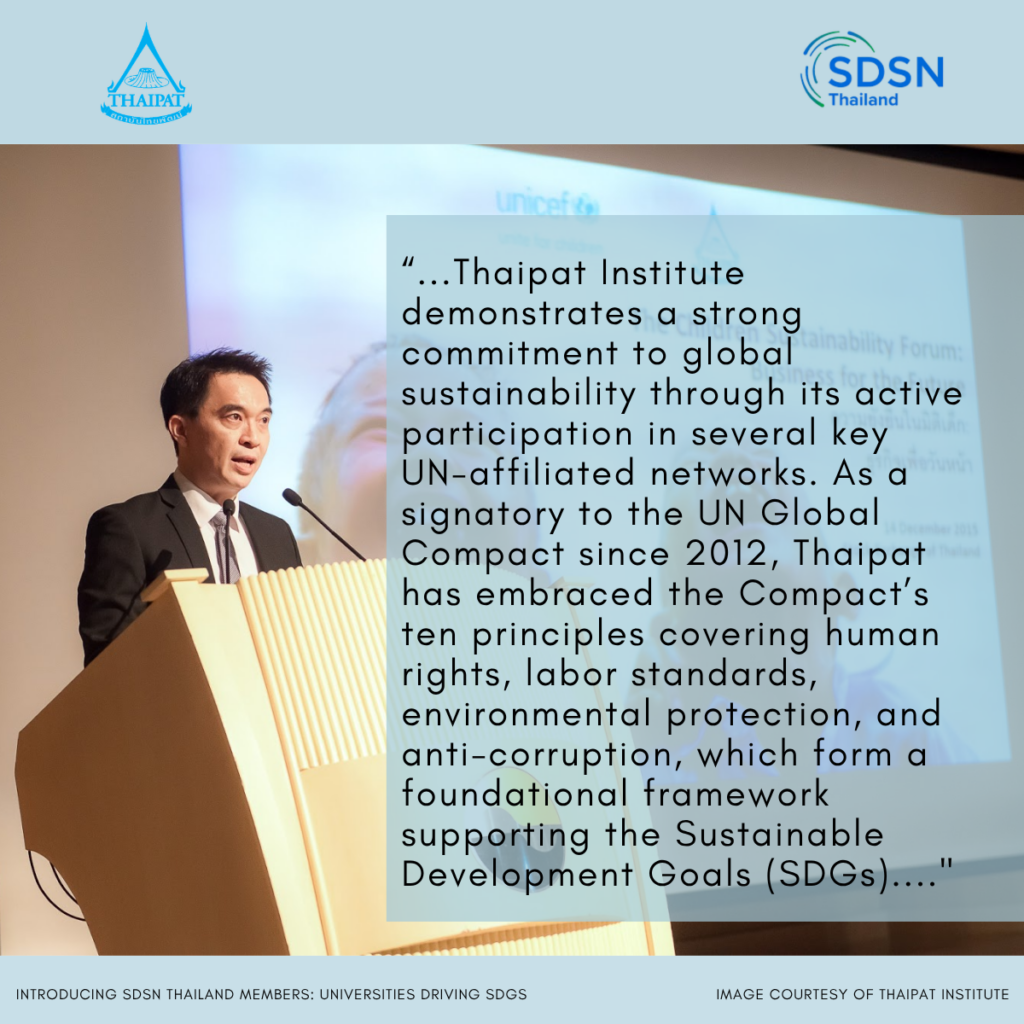
- Participation in UN-Affiliated Networks: Thaipat Institute demonstrates a strong commitment to global sustainability through its active participation in several key UN-affiliated networks. As a signatory to the UN Global Compact since 2012, Thaipat has embraced the Compact’s ten principles covering human rights, labor standards, environmental protection, and anti-corruption, which form a foundational framework supporting the Sustainable Development Goals (SDGs). This early commitment reflects Thaipat’s dedication to embedding universal sustainability principles into its work. In addition, Thaipat is a signatory to the Principles for Responsible Investment (PRI), underscoring its pledge to incorporate ESG factors into investment decisions. This commitment helps steer capital flows toward more sustainable companies and projects, thereby advancing multiple SDGs related to responsible economic growth and environmental stewardship. Further extending its global engagement, Thaipat is a member of the Sustainable Development Solutions Network (SDSN), an initiative launched by the UN Secretary-General to mobilize scientific and technical expertise worldwide in support of practical solutions for sustainable development. This membership connects Thaipat to a global community focused on accelerating SDG implementation through innovation and collaboration. Moreover, Thaipat serves as a supporting institution of the Principles for Sustainable Insurance (PSI) under the UN Environment Programme Finance Initiative (UNEP FI). Through this role, Thaipat promotes the integration of ESG considerations within Thailand’s insurance sector, which plays a critical role in addressing climate change (SDG 13), fostering responsible investment partnerships (SDG 17), and supporting broader sustainability goals. Collectively, these international affiliations enable Thaipat Institute to align its local efforts with global sustainability agendas, leverage international expertise, and influence key sectors in Thailand toward more responsible and sustainable practices.
- Research and Assessment of SDG Contribution: Thaipat Institute also researches and assesses how Thai companies contribute to the Sustainable Development Goals (SDGs) through its comprehensive reports and ESG evaluations. Its flagship publication, “The State of Corporate Sustainability in Thailand,” offers a detailed analysis of corporate alignment with the SDGs, utilizing frameworks such as the UNCTAD Guidance on Core Indicators (GCI). This report examines sustainability disclosures across eight key industries, providing valuable data and insights on how businesses integrate economic, social, and environmental dimensions into their operations. It also highlights emerging trends, such as corporate commitments to carbon neutrality and net-zero emissions, which are vital for climate action (SDG 13). In addition to these in-depth studies, Thaipat’s ESG ratings and indices, including the ESG100 universe, serve as practical tools that indirectly advance multiple SDGs by evaluating companies’ environmental, social, and governance performance. For example, strong environmental management practices assessed through these ratings support goals like Clean Water and Sanitation (SDG 6), Affordable and Clean Energy (SDG 7), Responsible Consumption and Production (SDG 12), and Life on Land and Below Water (SDGs 14 and 15). Social criteria in the ratings promote progress toward No Poverty (SDG 1), Good Health and Well-being (SDG 3), Quality Education (SDG 4), Gender Equality (SDG 5), Decent Work and Economic Growth (SDG 8), and Reduced Inequalities (SDG 10). Meanwhile, robust governance practices align with SDG 16, which underpins effective action across all other goals. Through this dual approach of rigorous research and practical ESG evaluation, Thaipat Institute provides critical guidance and benchmarks that help Thai companies measure, improve, and communicate their contributions to sustainable development.
- Capacity Building and Awareness: Thaipat Institute builds capacity for sustainability reporting and advancing the Sustainable Development Goals (SDGs) in Thailand through its comprehensive training and knowledge-sharing initiatives. As a GRI Certified Training Partner, Thaipat offers specialized training programs based on the Global Reporting Initiative (GRI) standards, which are widely recognized frameworks for sustainability reporting. These programs equip companies with the essential skills and knowledge to accurately measure, manage, and transparently report their environmental, social, and governance (ESG) impacts. By adopting GRI standards, organizations can effectively communicate their contributions to the SDGs, enhancing accountability and fostering continuous improvement in sustainable business practices. In addition to training, Thaipat organizes the Annual ESG Trends Conference, a flagship event that serves as a dynamic platform for disseminating the latest insights, innovations, and best practices in ESG and sustainability. This conference attracts a diverse audience of business leaders, investors, policymakers, and sustainability professionals, providing them with up-to-date information on emerging global trends and regulatory developments. By facilitating dialogue and knowledge exchange, the conference encourages Thai businesses to align their strategies with international sustainability agendas, including the SDGs, thereby accelerating the integration of responsible practices across industries. Together, these initiatives underscore Thaipat Institute’s commitment to empowering organizations to contribute meaningfully to sustainable development through enhanced reporting and informed action.
In summary, Thaipat Institute is deeply and effectively aligned with the UN SDGs. Its core mission, research methodologies, training programs, and extensive network of partnerships are all geared towards driving corporate action and transparency on sustainability, which is directly instrumental in helping Thailand achieve its SDG commitments. Thaipat’s role as a key thought leader and practical enabler for businesses in Thailand is critical for translating the global SDG agenda into local corporate action.
SDSN Thailand : How does Thaipat engage with business and local communities to promote sustainable practices and what are some of the successful cases?
Dr.Pipat : Thaipat Institute, as a leading organization in corporate sustainability in Thailand, employs several strategies to engage with businesses and local communities, primarily through its roles on research, training, and consulting. Here’s a breakdown of its engagement strategies and examples of successful cases:
Engagement with Businesses to Promote Sustainable Practices:
Thaipat Institute primarily engages with the private sector to promote the adoption and integration of sustainable practices into core business operations. One of its most effective tools in this effort is the rigorous ESG rating and benchmarking system, which evaluates listed companies based on their Environmental, Social, and Governance (ESG) performance. Through comprehensive assessments, Thaipat publishes the results in its well-recognized ESG universes, including the ESG100, ESG Emerging, and ESG Turnaround lists. These rankings provide transparent, data-driven benchmarks that allow companies to understand their sustainability standing relative to their peers.
The impact of this ESG rating system is significant. By publicly highlighting companies with strong ESG performance, Thaipat creates a powerful incentive for businesses to enhance their sustainability efforts. A high ESG score not only bolsters a company’s reputation but also increases its attractiveness to investors and improves access to capital. This dynamic encourages companies to adopt better labor practices, strengthen environmental management, and foster positive community relations. As a result, the ESG rating system acts as a catalyst for widespread improvements in corporate sustainability across Thailand.
While Thaipat’s role is primarily evaluative, its influence indirectly drives companies to undertake initiatives that benefit local communities and the environment. For example, companies aiming to secure or improve their position on the ESG100 list often invest in enhanced waste management systems that reduce pollution and protect surrounding communities. Similarly, they may increase investments in employee training programs and fair wage policies, which contribute to the well-being of local families. Although these actions are initiated by the companies themselves, Thaipat’s ESG benchmarking serves as a critical motivator, fostering sustainable development through indirect but impactful community and environmental benefits.
Thaipat Institute’s primary mode of engagement is with the private sector, influencing them to adopt and integrate sustainable practices into their core operations.
Consulting and Training Services (CSR-in-Process & CSV):
Thaipat Institute provides comprehensive consulting and training services designed to help companies integrate Corporate Social Responsibility (CSR) and Creating Shared Value (CSV) into their core business models. Through its expert consulting, Thaipat guides organizations on how to embed these sustainability concepts into everyday operations, ensuring that social and environmental considerations become integral to business strategy rather than peripheral activities. Additionally, as a certified Global Reporting Initiative (GRI) training partner, Thaipat equips companies with the knowledge and skills necessary to accurately measure, manage, and report their sustainability performance and impacts. This combination of consulting and capacity-building enables businesses to align their practices with international standards and stakeholder expectations.
The direct engagement offered by Thaipat has a meaningful impact on corporate sustainability efforts. By working closely with companies, Thaipat helps them identify opportunities where their business activities can simultaneously generate economic value and address pressing social or environmental challenges. This approach often results in projects that deliver tangible benefits to local communities, such as improved livelihoods, environmental restoration, or enhanced access to education and healthcare. By fostering this synergy between profitability and positive societal impact, Thaipat encourages businesses to become active contributors to sustainable development.
One notable initiative illustrating Thaipat’s influence is the establishment of the Sustainability Disclosure Community (SDC). This platform supports organizations in enhancing their sustainability reporting practices, encouraging more comprehensive and transparent disclosure of social and environmental impacts. As a result, companies are better able to communicate their contributions to local communities and broader sustainability goals, fostering greater accountability and trust among stakeholders. While the direct outcomes vary by company, the SDC has helped elevate the overall quality and depth of sustainability reporting in Thailand, indirectly driving stronger corporate responsibility and community engagement across sectors.
In essence, Thaipat Institute acts as a critical enabler and equips businesses with the knowledge, tools, and recognition needed to implement sustainable practices that, in turn, foster positive relationships and generate tangible benefits for local communities across Thailand. Its success lies in ability to influence the how and why of corporate engagement with society.
SDSN Thailand : What are the biggest challenges facing you and the institute in the pursuit of sustainability and what are the opportunities?
Dr.Pipat : Thaipat Institute, despite its leading position in promoting corporate sustainability in Thailand, faces a number of challenges while also being presented with significant opportunities.
Biggest Challenges Facing Thaipat Institute:
- Varying Levels of Corporate Understanding and Commitment: One persistent issue is the prevalence of “greenwashing” and lip service. While many companies engage in sustainability reporting, often driven by investor demands or regulatory requirements, some treat it merely as a compliance exercise rather than embracing it as a genuine transformation of their business strategy. This superficial engagement undermines the potential impact of sustainability initiatives, and Thaipat must continuously work to shift corporate mindsets from box-ticking to authentic, strategic integration of ESG principles. Another major challenge lies in engaging Small and Medium-sized Enterprises (SMEs), which constitute a large portion of Thailand’s economy but often lack the resources, expertise, and external pressures that motivate larger listed companies to adopt robust sustainability practices. SMEs may find it difficult to allocate time, budget, or technical capacity to sustainability efforts, making it harder for Thaipat to extend its influence beyond the more visible corporate sector. Tailoring support and creating accessible pathways for SMEs to participate meaningfully in sustainability remains an ongoing priority and challenge. Additionally, there is a disconnect between sustainability and profitability in the perception of some businesses. Many companies still struggle to recognize how sustainability investments can drive long-term financial performance, innovation, and competitive advantage. Instead, they often view ESG initiatives as cost burdens or risks rather than strategic opportunities that can enhance resilience, operational efficiency, and stakeholder trust. Overcoming this mindset is critical for Thaipat as it seeks to foster deeper and more widespread commitment to sustainable development across Thailand’s diverse business landscape.
- Data Quality and Standardization: Some challenges facing the institute are related to data quality and standardization in its efforts to accurately assess and promote corporate sustainability in Thailand. Despite its strong advocacy for international reporting frameworks such as the Global Reporting Initiative (GRI), the quality and consistency of sustainability data disclosed by Thai companies remain uneven. Many organizations provide sustainability reports with varying levels of detail and transparency, which complicates Thaipat’s ability to conduct precise and reliable ESG assessments. Since Thaipat’s ESG ratings largely depend on publicly available information, inconsistencies and gaps in data can undermine the accuracy and comparability of its evaluations, posing a major obstacle to benchmarking corporate sustainability performance effectively. Another related challenge is the lack of granularity in corporate disclosures. While many companies report on broad sustainability initiatives or high-level goals, they often fall short of providing detailed, quantifiable metrics that clearly demonstrate the real impact of their actions. This absence of specific data makes it difficult for Thaipat and other stakeholders to gauge true progress toward sustainability targets or to identify areas needing improvement. Without granular and measurable indicators, sustainability reporting risks becoming more symbolic than substantive, limiting its usefulness for investors, regulators, and the public. Furthermore, the rapid evolution of global sustainability reporting standards presents an ongoing challenge for Thaipat. New frameworks such as the International Sustainability Standards Board (ISSB) guidelines and the European Union’s Taxonomy for sustainable activities are continuously emerging and evolving. To remain relevant and authoritative, Thaipat must constantly update and refine its assessment methodologies to align with these global developments. This requires significant expertise, resources, and agility to interpret complex standards and integrate them into local contexts. Navigating this dynamic landscape demands sustained effort and innovation to ensure that Thaipat’s ESG ratings and guidance remain credible, comprehensive, and forward-looking.
- Limited Enforcement and Regulatory Pull: Thaipat Institute operates within a regulatory environment where enforcement and mandatory requirements for sustainability practices are still relatively limited. Although key institutions such as the Securities and Exchange Commission (SEC) and the Stock Exchange of Thailand (SET) actively encourage companies to adopt sustainable business practices and enhance ESG disclosures, the overall regulatory framework in Thailand is not as stringent or prescriptive as those found in many developed markets. This comparatively softer regulatory landscape means there is less mandatory pressure on companies to fully integrate sustainability into their operations, which can slow the pace of widespread adoption and limit the effectiveness of sustainability initiatives. Moreover, much of the corporate sustainability reporting and related actions in Thailand remain largely voluntary. Thaipat’s ability to drive meaningful change therefore depends heavily on its capacity to persuade companies through education, capacity building, and public recognition rather than through the force of legal mandates. The Institute leverages market mechanisms—such as ESG ratings, benchmarking, and awards—to incentivize businesses to improve their sustainability performance. While this voluntary approach has fostered significant progress among leading firms, it also means that achieving broader, systemic change requires ongoing effort to build awareness, demonstrate value, and cultivate a culture of responsible business beyond regulatory compulsion.
- Resource Constraints (for Thaipat itself): Thaipat Institute, as a public benefit organization, faces inherent resource constraints that impact its capacity to fully meet the growing demands of Thailand’s sustainability landscape. Limited funding, human resources, and technological infrastructure can restrict the Institute’s ability to continuously expand and deepen its research activities, refine its ESG assessment methodologies, and broaden its outreach efforts. These constraints pose challenges in scaling up operations to keep pace with the increasing number of companies seeking guidance, training, and evaluation in sustainability practices. Balancing the need for high-quality outputs with available resources requires careful prioritization and strategic management to maximize impact. In addition to internal resource limitations, Thaipat must also navigate the rapidly evolving global sustainability environment. The pace of change in sustainability standards, reporting frameworks, and best practices is accelerating, driven by international initiatives such as the ISSB, EU Taxonomy, and emerging climate-related disclosure requirements. To remain a leader in Thailand’s sustainability sector, Thaipat needs to continuously invest in building expertise, updating its methodologies, and enhancing its training programs. This ongoing commitment demands not only financial resources but also access to cutting-edge knowledge and skilled professionals who can interpret and adapt global developments to the local context. Meeting these challenges is essential for Thaipat to maintain its relevance and effectiveness in supporting Thailand’s transition toward a more sustainable future.
Opportunities for Thaipat Institute:
- Growing Investor Demand for ESG: Thaipat Institute stands at a promising crossroads, with growing investor demand for Environmental, Social, and Governance (ESG) considerations presenting significant opportunities to expand its influence and impact. Globally and within Thailand, there is a marked increase in appetite for sustainable finance, as investors increasingly seek to align their portfolios with ESG principles. Thaipat’s ESG100 list and other comprehensive rating systems have become essential tools for these investors, offering reliable, data-driven insights into companies’ sustainability performance. This rising demand not only enhances Thaipat’s relevance but also provides the Institute with substantial leverage to encourage more companies to improve their ESG practices, thereby advancing corporate sustainability across the country. Beyond serving as a trusted source of ESG information, Thaipat has the opportunity to deepen its collaboration with asset management firms and financial institutions to develop innovative ESG-linked investment products. By leveraging its robust data and rigorous assessments, Thaipat can help design funds, indices, and other financial instruments that cater to the growing market for responsible investment. Such partnerships would not only diversify Thaipat’s service offerings but also amplify the flow of capital toward sustainable businesses, reinforcing the virtuous cycle of investment and corporate responsibility. These opportunities position Thaipat Institute to play a pivotal role in shaping Thailand’s sustainable finance ecosystem and supporting the country’s broader transition toward a more sustainable economy.
- Government and Regulatory Support: The Thai government’s growing emphasis on sustainable development presents a significant opportunity for Thaipat Institute to strengthen its role and expand its impact. With sustainability increasingly becoming a national priority, there is a supportive policy environment that aligns closely with Thaipat’s mission to promote responsible business practices and corporate sustainability. This alignment opens doors for deeper collaboration between Thaipat and government agencies in shaping and implementing national sustainability strategies. By contributing its expertise and research capabilities, Thaipat can help ensure that Thailand’s sustainability agenda is grounded in robust data, practical frameworks, and internationally recognized standards, thereby accelerating the country’s progress toward its environmental and social goals. In addition, as Thai regulators work to harmonize local sustainability reporting and governance requirements with global best practices, Thaipat is well-positioned to serve as a trusted advisor and facilitator in this transition. The increasing convergence of regulatory frameworks—such as those influenced by the International Sustainability Standards Board (ISSB) and other international initiatives—requires specialized knowledge and experience to interpret and implement effectively. Thaipat’s deep understanding of ESG standards and its track record in capacity building make it an invaluable partner for regulators seeking to introduce new mandates or enhance existing guidelines. By supporting regulatory harmonization efforts, Thaipat can help create a more transparent, consistent, and credible sustainability reporting ecosystem in Thailand, benefiting businesses, investors, and society at large.
- Technological Advancements: Technological advancements offer Thaipat Institute valuable opportunities to enhance its capabilities and broaden its impact in promoting sustainability. By leveraging artificial intelligence (AI) and advanced data analytics, Thaipat can significantly improve the efficiency and depth of its data collection, processing, and analysis. These technologies enable the Institute to handle vast volumes of sustainability information from a wide range of companies more effectively, uncovering nuanced insights and trends that might otherwise go unnoticed. Enhanced analytical capabilities not only improve the accuracy and timeliness of Thaipat’s ESG assessments but also allow for more sophisticated benchmarking and predictive modeling, empowering businesses and investors with richer, data-driven decision-making tools. In addition, the adoption of digital platforms for training and outreach presents a powerful avenue for Thaipat to scale its educational initiatives and knowledge dissemination. Through online courses, webinars, and interactive tools, Thaipat can reach a much broader audience, including Small and Medium-sized Enterprises (SMEs) that may have previously faced barriers to accessing in-person training due to geographic or resource constraints. Digital platforms also facilitate ongoing engagement and community-building among sustainability professionals, fostering peer learning and collaboration. By embracing these technological solutions, Thaipat can expand its reach across Thailand, democratize access to sustainability knowledge, and accelerate the adoption of responsible business practices throughout the country’s diverse economic landscape.
- Emerging Sustainability Themes: Emerging sustainability themes present significant opportunities for Thaipat Institute to expand its expertise and leade ship in addressing some of the most pressing global challenges. One of the foremost areas is climate change and the global drive toward Net Zero targets. The urgency of climate action has created a strong demand for specialized knowledge in carbon accounting, climate risk assessment, and decarbonization strategies. Thaipat can capitalize on this momentum by further developing its capabilities and service offerings to help businesses accurately measure their carbon footprints, identify climate-related risks, and implement effective pathways toward reducing greenhouse gas emissions. By doing so, Thaipat will not only support Thailand’s climate commitments but also position itself as a key resource for companies navigating the complex transition to a low-carbon economy. Another critical emerging theme is biodiversity and nature-positive business practices. As the global community increasingly recognizes the severe threat of biodiversity loss, there is a growing need for frameworks that enable companies to assess, manage, and transparently report their impacts and dependencies on natural ecosystems. Thaipat is well placed to lead in this area by advancing tools such as the Thailand Natural Capital Disclosure Framework (TNDF) and other nature-related reporting standards. By guiding businesses to adopt nature-positive strategies, Thaipat can help protect vital ecosystems while aligning corporate sustainability efforts with international biodiversity goals, thereby contributing to the preservation of Thailand’s rich natural heritage. In addition to environmental concerns, there is an expanding focus on the social dimensions of sustainability, particularly issues related to just transition and social equity. This includes safeguarding human rights, promoting fair labor practices, and enhancing community resilience in the face of economic and environmental change. Thaipat can deepen its research and advisory services to support companies in embedding these principles into their operations, ensuring that sustainability efforts are inclusive and equitable. By championing the concept of a just transition, Thaipat helps ensure that the shift toward sustainable development benefits all stakeholders, particularly vulnerable communities and workers, thus fostering a more holistic and socially responsible approach to sustainability in Thailand.
- Expanding Regional Influence: Given Thailand’s strategic position within the ASEAN region, Thaipat Institute has a unique opportunity to expand its influence by sharing its expertise and sustainability methodologies with neighboring countries. Thailand has historically played a constructive and stabilizing role in ASEAN, contributing to institution-building, economic integration, and regional security. This legacy positions Thaipat well to serve as a regional hub for sustainable development knowledge and practice, helping to elevate sustainability standards across Southeast Asia. By leveraging Thailand’s active participation and leadership within ASEAN, Thaipat can facilitate cross-border collaboration, promote harmonized ESG frameworks, and support capacity building among businesses and policymakers throughout the region. As ASEAN continues to deepen economic integration and address shared challenges such as environmental protection and social equity, Thaipat’s role could extend beyond national boundaries to influence regional sustainability agendas. The Institute’s proven expertise in ESG assessment, corporate responsibility, and sustainability reporting can provide valuable guidance to emerging markets within ASEAN that are still developing their sustainability infrastructure. By fostering regional dialogue and cooperation on sustainable business practices, Thaipat can help create a more resilient and inclusive ASEAN economic community. This expansion of regional influence not only enhances Thaipat’s impact but also contributes to Thailand’s broader diplomatic and economic goals of strengthening ASEAN’s unity and global relevance. By strategically addressing these challenges and capitalizing on these opportunities, Thaipat Institute can further solidify its leadership and accelerate the transition towards a more sustainable business landscape in Thailand and beyond.
SDSN Thailand : What motivates your personal commitment to sustainable development, and how does this influence your leadership style?
Dr.Pipat : Our commitment to sustainable development is driven by a deep-seated belief in the interconnectedness of business success, social well-being, and environmental health. This commitment is shaped by several key motivators:
We founded Thaipat Institute in 1999 with the explicit mission “to work with organizations and companies, individually and collectively, to develop effective solutions and endure business growth with social progress by driving integration of sustainability into core business practices.” This core purpose inherently commits the firm to sustainable development.
We fundamentally believe that genuine sustainability leads to long-term business growth and resilience. We advocate for moving beyond traditional Corporate Social Responsibility (CSR) to “CSR-in-process” and “Creating Shared Value (CSV),” where social and environmental considerations are integrated into core business strategy for mutual benefit. This is a core motivation – demonstrating that sustainability isn’t just a cost, but a strategic advantage.
As a public-interest organization, Thaipat doesn’t have direct regulatory authority. Therefore, our leadership style relies on influence, persuasion, and building consensus. We achieve this through:
- Credibility: Built on rigorous research, transparent assessments (ESG ratings), and adherence to international standards.
- Education and Capacity Building: Through training and consulting, we empower businesses with the knowledge and tools to act.
- Recognition and Awards: Incentivizing positive behavior through programs like the Sustainability Disclosure Awards.
- Partnerships: Actively engaging with financial institutions, regulators, and other stakeholders to create an ecosystem that supports sustainability.
In essence, our leadership style is one of influential guidance, evidence-based advocacy, and principled innovation. We aim to inspire and enable guiding Thai businesses towards a future where economic prosperity is inextricably linked with social equity and environmental stewardship.


